
When parents shop for children’s furniture, they often focus on style first—colour, theme, shape, and appearance. But the real quality of children’s furniture is determined by one factor above all others: the materials used in construction.
The materials decide whether the furniture will:
- Last 2 years or 10 years
- wobble and weaken or stay solid
- remain safe or become unstable
- handle daily use or fall apart
Understanding the key materials used in kids’ furniture is essential for making a smart purchase, especially when buying beds, bunks, desks, toy boxes, and upholstered seating.
Below is a clear and practical guide to the most common materials, what they mean, and how they affect quality.
Solid Timber (Hardwood and Softwood)
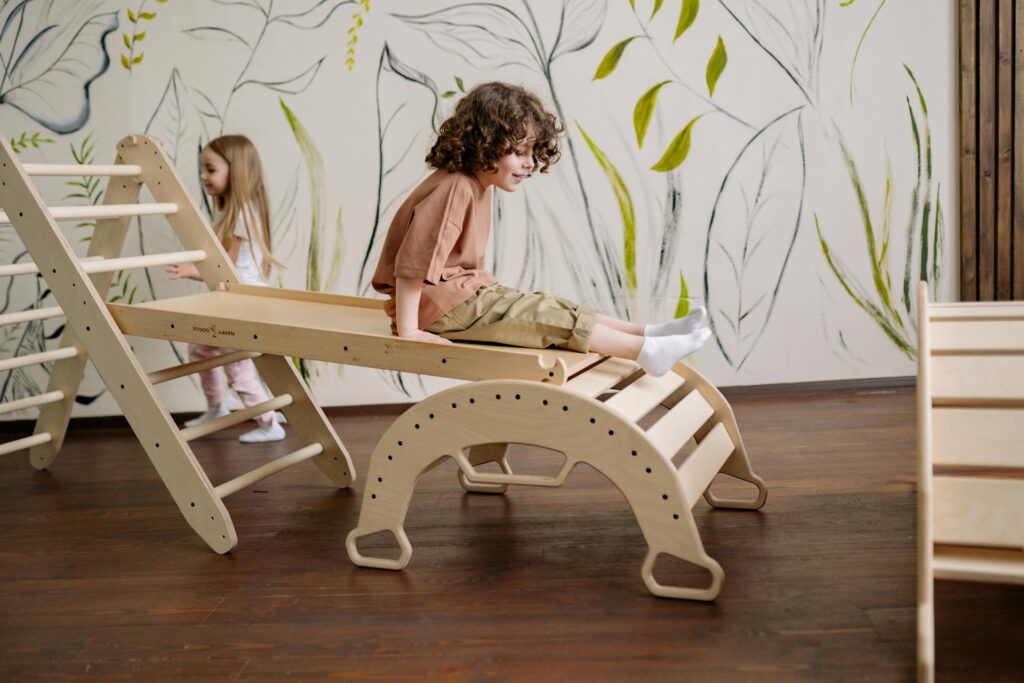
Solid timber is one of the most traditional and reliable materials used in quality furniture. It has been used for generations because it is strong, repairable, and naturally durable.
Common Types of Solid Timber
- Pine (softwood)
- Rubberwood (medium hardwood)
- Beechwood (hard hardwood)
- Oak (hard hardwood)
- Ash (hard hardwood)
- Maple (hard hardwood)
Benefits of Solid Timber in Kids’ Furniture
- extremely strong and long-lasting
- can handle climbing and rough use
- joints can be repaired if needed
- looks better over time
- holds screws and fittings firmly
Downsides
- heavier to move
- often more expensive
- cheaper pine versions can dent easily
Solid timber is ideal for:
- bunk beds
- single beds
- toy boxes
- wardrobes
- shelving units
If a supplier claims “solid timber construction”, always ask what timber species is used, because pine and oak are not the same level of quality.
Engineered Timber (Plywood, Laminated Panels, Composite Timber)
Engineered timber refers to wood products made by bonding layers or pieces together. Some engineered timber is excellent, while other versions are cheap and weak.
Plywood (High Quality When Done Properly)
Plywood is made from thin layers of timber veneer glued together with the grain running in alternating directions. This gives it strength and stability.
Benefits
- very strong for its weight
- resists warping better than solid timber
- good load-bearing strength
- ideal for structural panels
Downsides
- low-quality plywood can delaminate
- visible edges may need proper finishing
Plywood is commonly used in premium furniture because it performs well and remains stable under pressure.
High-grade plywood is excellent for:
- bed bases
- shelving
- toy storage panels
- bunk bed structural panels
MDF (Medium Density Fibreboard)
MDF is a common material in modern furniture. It is made from compressed wood fibres and resin.
Benefits
- smooth surface (ideal for painted finishes)
- consistent and flat
- affordable
- looks clean and modern
Downsides
- heavy
- swells badly if exposed to moisture
- weaker screw-holding strength than plywood or timber
- edges can chip if not properly sealed
MDF is fine for:
- decorative panels
- wardrobe doors
- desk tops (if sealed properly)
But MDF is not ideal for:
- structural bed frames
- bunk bed ladders
- high-impact areas
Particleboard / Chipboard (Low-End Material)
Particleboard is made from compressed wood chips and glue. It is widely used in flat-pack furniture because it is cheap to produce.
Benefits
- low cost
- smooth enough for laminate finishes
Downsides
- weakest of all timber-based boards
- poor resistance to impacts
- screws loosen over time
- can break under heavy stress
- swells badly with moisture
Particleboard is common in low-priced furniture, but it is not recommended for children’s furniture that must withstand climbing, jumping, and constant movement.
If a bunk bed is made from particleboard, it is usually not a long-term investment.
Metal Frames (Steel and Aluminium)
Metal is commonly used in bunk beds, bed frames, and some desk systems.
Steel
Steel is strong, stable, and durable.
Benefits:
- excellent weight capacity
- long lifespan
- does not warp
Downsides:
- can feel cold or industrial
- may squeak if joints are poorly made
- can rust if coatings are poor
Aluminium
Aluminium is lightweight and corrosion resistant, but it is not as strong as steel in structural applications unless properly engineered.
Metal frames are best for:
- modern bunk beds
- loft beds
- minimalist designs
A strong steel bunk bed can be excellent, but it must be well-welded and properly powder-coated.
Upholstery Materials (Foam, Fabric, Leather-Look Vinyl)
Children’s lounge chairs, sofas, and play couches rely heavily on upholstery quality.
Foam Quality (Critical for Comfort and Longevity)
Foam is not “just foam”. Density matters.
High-Density Foam
- holds shape for years
- provides support
- does not collapse quickly
Low-Density Foam
- feels soft at first
- collapses within months
- loses structure quickly
High-quality foam furniture is ideal for children because it is:
- safe (soft edges)
- lightweight
- versatile
- durable when made properly
This is especially popular in:
- play couches
- modular lounges
- foam beds
- soft seating systems
Fabric Upholstery (Polyester, Cotton Blends, Performance Fabrics)
Standard Polyester Fabric
- durable
- stain resistant
- affordable
- easy to clean
Cotton and Cotton Blends
- softer feel
- breathable
- stains more easily
- may fade faster
Performance Fabrics
Premium children’s furniture increasingly uses performance fabrics that are:
- stain resistant
- easy-clean
- hard-wearing
- resistant to fading
For kids furniture, performance fabric is one of the best choices, particularly in lighter colours.
Leather and Leather-Look Upholstery
Genuine Leather
- durable
- premium look
- easy to wipe clean
Downside:
- expensive
- can scratch
PU Leather (Leather-Look Vinyl)
- cheaper
- easy to clean
- looks modern
Downside:
- can crack and peel over time if low grade
PU leather is fine for children’s chairs if it is commercial-grade quality, but cheap PU often deteriorates quickly.
Plastic Components (Common in Budget Furniture)
Plastic is often used for:
- drawer runners
- storage tubs
- small shelving
- bed parts in cheap furniture
Plastic can be acceptable for non-load-bearing components, but for structural items it is generally a warning sign.
Cheap plastic becomes brittle and breaks easily.
Paints, Finishes, and Coatings (Often Overlooked)
Finishes matter as much as the base material.
A good finish should be:
- non-toxic
- low-VOC
- scratch resistant
- properly sealed
Cheap finishes:
- chip easily
- stain easily
- may contain unsafe chemicals
For children, the safest finishes are:
- water-based paints
- non-toxic lacquers
- sealed natural timber finishes
Always ask if the furniture is compliant with child-safe coating standards.
Hardware and Fixings (The Hidden Material That Matters)
Even if a bed is solid timber, cheap hardware can ruin it.
Look for:
- steel brackets
- strong bolts
- quality ladder fittings
- heavy-duty drawer runners
Poor hardware leads to:
- wobbling
- squeaking
- loosening joints
- instability
In bunk beds especially, hardware quality is critical.
Best Material Choices for Different Kids Furniture Categories
Bunk Beds
Best materials:
- solid hardwood
- solid timber + plywood reinforcement
- steel frames (high quality)
Avoid:
- particleboard bunk beds
Desks and Study Furniture
Best materials:
- solid timber tops
- plywood panels
- MDF (sealed, quality grade)
Toy Boxes and Storage
Best materials:
- plywood
- solid timber
- MDF with proper finishing
Lounge Chairs and Sofas
Best materials:
- high-density foam
- performance fabric upholstery
- strong timber internal frame
Summary: What Parents Should Look For
The best children’s furniture typically uses:
- solid timber or high-grade plywood for structure
- high-density foam for seating
- performance fabric for upholstery
- safe, non-toxic finishes
- strong steel hardware and fittings
The weakest children’s furniture is usually made from:
- low-density particleboard
- cheap foam
- poor-quality fabric
- low-grade fittings
Final Word: Materials Determine Value
Parents often want to save money, but with children’s furniture, poor materials lead to constant replacement. That ends up costing more.
If you want furniture that lasts, stays safe, and holds its value, focus on what it is made from—not just what it looks like.
Explore the premium children’s furniture collection at Maison Clair de Lune.