
Bunk beds are one of the most popular furniture choices for children’s bedrooms, and for good reason. They save space, create a fun sleeping environment, and make shared bedrooms far more practical.
But bunk beds are also one of the most important furniture purchases a parent can make from a safety perspective. A poorly built bunk bed is not just inconvenient—it can be dangerous.
Parents often buy bunk beds based on appearance, price, or online photos, but the truth is that quality and design matter far more with bunks than with ordinary beds.
A good bunk bed should last for years, support children safely as they grow, and remain stable even under daily climbing, jumping, and movement.
This buying guide will help parents choose bunk beds the right way—focusing on safety, durability, comfort, and long-term value.
Why bunk beds are a smart choice for families
Bunk beds are often chosen because they provide an obvious benefit: two beds in the footprint of one.
This makes them ideal for:
- Shared bedrooms
- Small bedrooms
- Holiday homes
- Sleepover-friendly homes
- Families with limited space
Bunk beds also create extra floor space for desks, toy storage, or play areas. In many homes, bunks can make the difference between a cramped room and a functional room.
The first decision: bunk bed or loft bed?
Parents should first understand the difference.
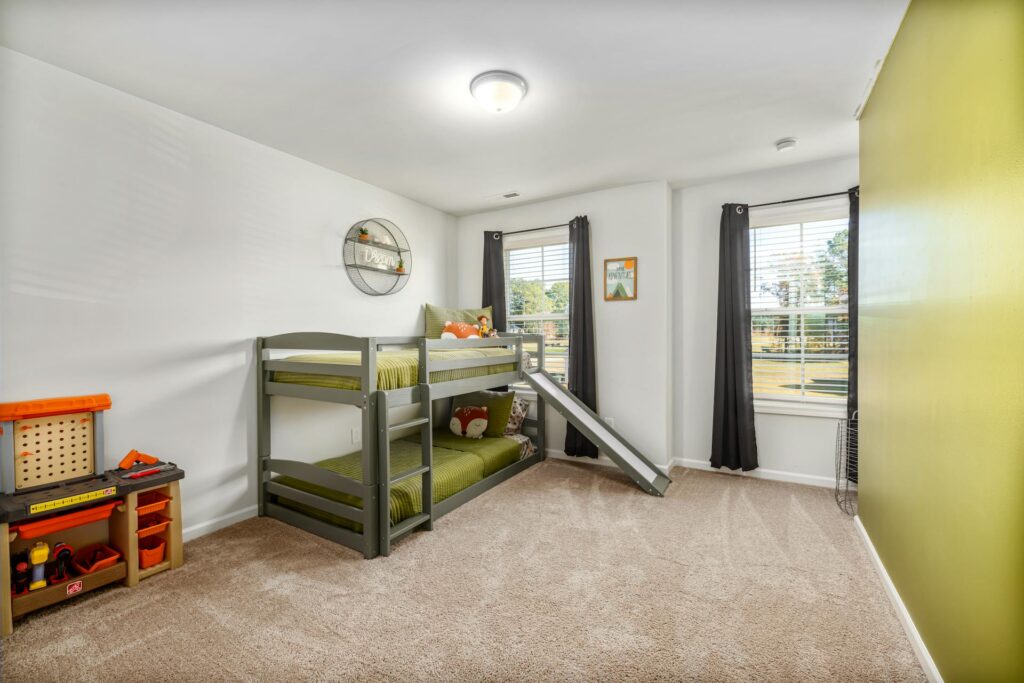
Bunk bed
Two sleeping spaces: one above the other.
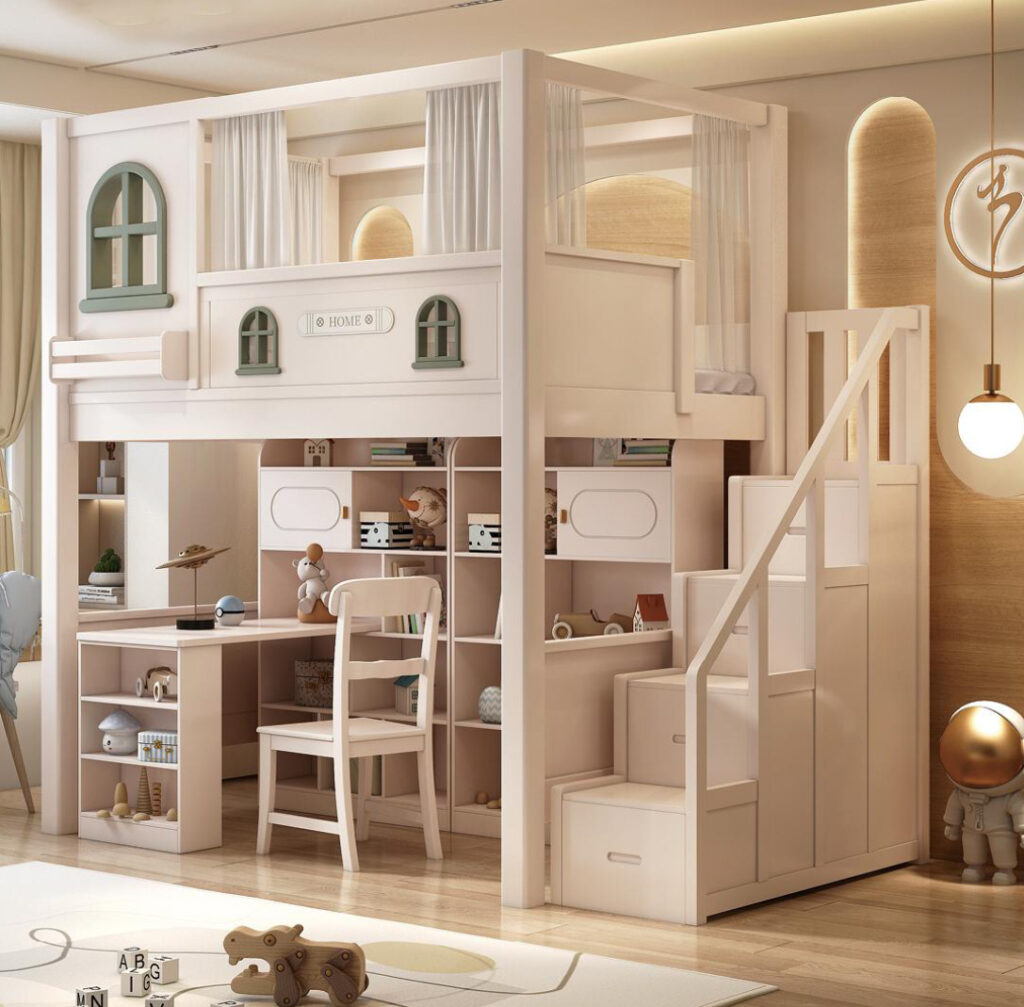
Loft bed
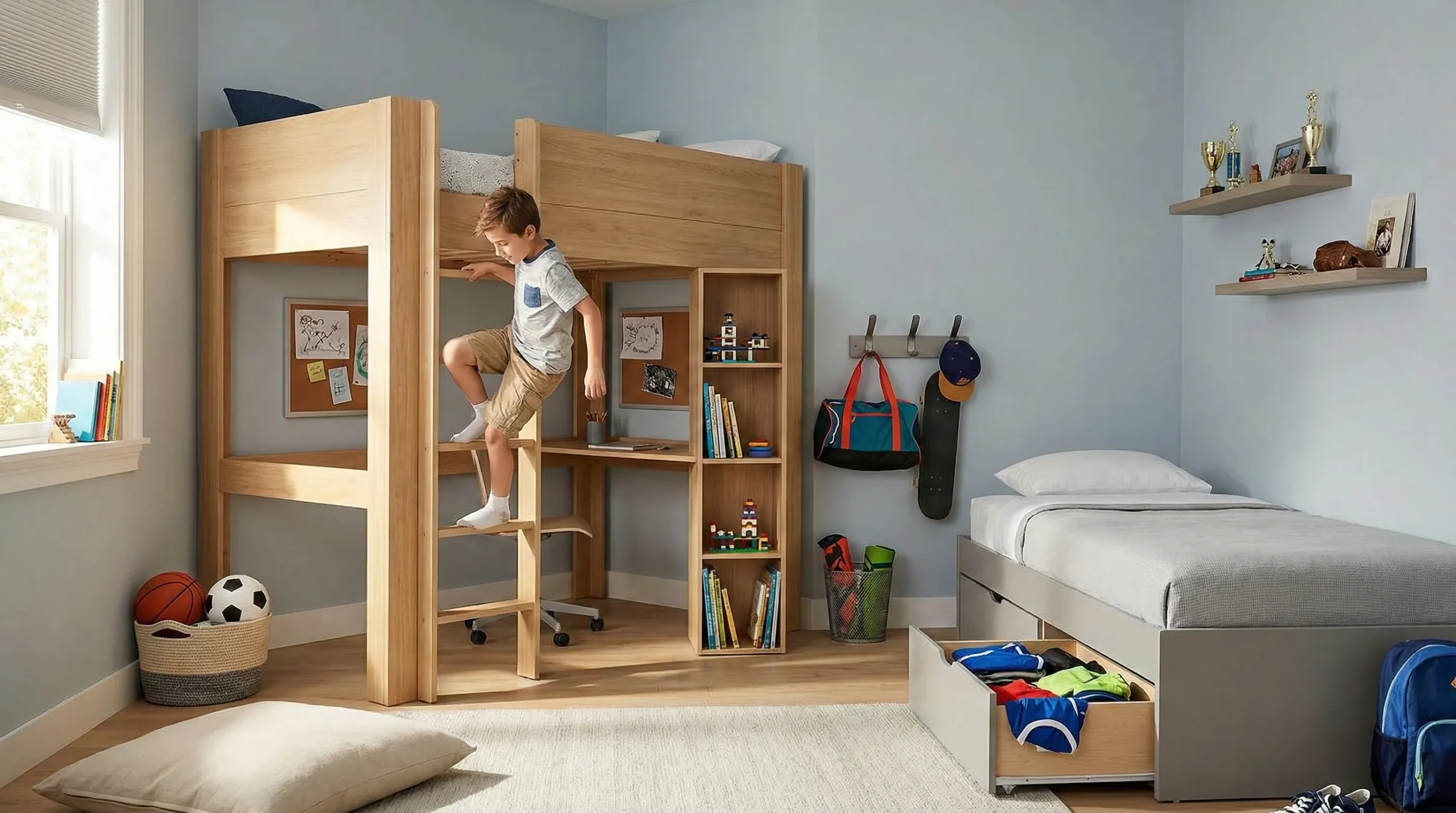
One bed above, with open space underneath for desk, storage, or play.
If you have two children sharing, a bunk bed is the obvious solution. If you have one child but need more space, a loft bed can be even more valuable.
Safety first: age recommendations for bunk beds
A common guideline is that the top bunk is not recommended for children under six years old.
This is not just a suggestion. Younger children often lack the coordination and judgement required to safely climb ladders and sleep at height.
Parents should consider:
- Can the child climb safely without rushing?
- Does the child sleep calmly or roll around?
- Is the child likely to climb in the middle of the night?
- Will they follow rules?
Even with guard rails, younger children can be at risk.
For families with a younger child, a bunk bed can still be used, but the younger child should sleep on the bottom bunk.
Guard rails: a non-negotiable feature
A safe bunk bed must have proper guard rails on the top bunk.
Guard rails should:
- Be high enough above the mattress
- Run along the full length of the bed
- Have a safe opening only at ladder access
- Be sturdy and fixed securely
Parents should check the recommended mattress height. If the mattress is too thick, it can reduce the effective height of the guard rail and create a fall risk.
This is a common mistake. Parents buy a thick mattress for comfort, not realising it may compromise safety.
Ladder design: one of the most important features
The ladder is the child’s daily access point. If the ladder is poorly designed, the bunk becomes dangerous and frustrating.
A good ladder should have:
- Wide steps
- Non-slip surface
- Strong attachment to the frame
- A safe angle for climbing
- Comfortable grip points
Vertical ladders save space but can be harder for younger children. Angled ladders are safer and easier, but they take up more room. The right choice depends on bedroom size and the child’s age.
Stability and strength: how to identify a quality bunk bed
Bunk beds must handle movement. Kids climb them, hang from them, and sometimes treat them like a jungle gym.
A quality bunk bed should:
- Feel solid and heavy
- Have reinforced joints and support beams
- Have a stable frame with no wobble
- Have strong slat support
- Use quality bolts and connectors
- Be designed to handle weight safely
If a bunk bed shakes when you push it lightly, it will not last long. Over time, it will loosen and become unsafe. Parents should always choose bunks built with strong structural support.
The slat system: the hidden weak point
Many cheap bunk beds fail because of poor slats.
Weak slats can sag or break, creating discomfort and risk.
A good bunk bed should have:
- Strong timber slats or reinforced support panels
- Proper spacing for mattress support
- Secure fixing so slats do not shift
A bunk bed is only as good as its base support.
Materials matter: timber vs engineered materials
Bunk beds can be made from timber, metal, or engineered materials. The most important factor is not just the material but the construction quality.
Solid timber frames are often preferred because they feel strong and stable. However, engineered timber with proper reinforcement can also be durable.
Cheap particle board construction should be avoided in bunk beds. It does not handle stress well and can weaken over time. For parents wanting long-life furniture, quality timber or reinforced engineered timber is the best choice.
Space-saving features: bunks that do more than sleep
Modern bunk beds can include clever space-saving features.
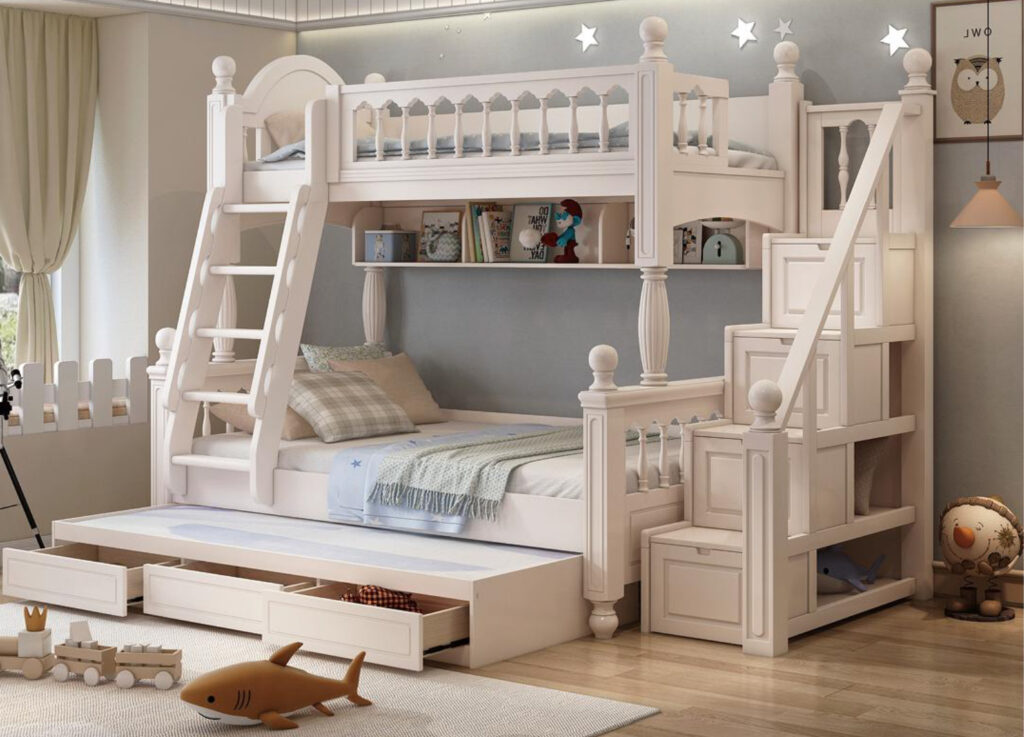
These may include:
- Built-in drawers under the bottom bunk
- Trundle beds for sleepovers
- Built-in shelving for books and toys
- Integrated desk areas
- Built-in wardrobe sections
These features can reduce the need for extra furniture, which is ideal in compact bedrooms. However, parents should check that added features do not compromise strength. Storage additions should be integrated into the frame, not added as flimsy attachments.
Bunk bed mattresses: comfort without compromising safety
Choosing the right mattress is essential.
Parents should check:
- Correct mattress thickness for top bunk safety
- Proper support for growing children
- Breathable materials
- Durability
The top bunk mattress must not be so thick that the child sits too high relative to the guard rail. A common guideline is to keep the mattress low enough that the guard rail remains safely above the child’s sleeping height.
Consider the child’s personality and habits
Not every child suits a bunk bed.
Parents should consider:
- Is the child restless at night?
- Does the child wake often?
- Does the child have a fear of heights?
- Will the child climb safely or take risks?
Some children love bunks immediately. Others may take time to adjust. If your child is extremely active or impulsive, extra attention to safety features is essential.
Planning the bedroom layout around the bunk bed
A bunk bed changes the room layout dramatically. Parents should plan carefully.
Key considerations:
- Allow enough clearance around the ladder.
- Ensure ceiling height is adequate.
- Make sure the top bunk is not too close to ceiling fans or lights.
- Leave enough space for drawers or trundles if included.
- Plan for storage and study space.
A bunk bed can free up floor space, but only if the rest of the room is organised properly.
Long-life bunk beds: buying once instead of buying twice
The best bunk beds are built to last for years.
A high-quality bunk bed can last through:
- Primary school years
- Teenage years
- Guest room use later on
Parents should look for designs that are timeless and mature enough to suit older children. Avoid overly themed bunks that may feel childish later. A classic design offers the best long-term value.
Warranty and manufacturer trust
Because bunk beds are a safety item, warranty matters.
A quality supplier should provide:
- Clear warranty coverage
- Transparent material information
- Clear weight limits
- Assembly instructions
- Reliable customer support
Parents should be cautious of unknown online sellers with no clear warranty details. If a supplier cannot explain weight ratings or safety design, it is a warning sign.
The ultimate bunk bed buying checklist
Before purchasing, parents should ask:
- Is the frame stable and strong?
- Are guard rails high and secure?
- Is the ladder safe and easy to climb?
- Are the slats strong and properly supported?
- Is the mattress height safe for the top bunk?
- Is the design suitable for the child’s age?
- Does it offer storage or extra functionality?
- Will it suit the child in five years?
- Does it come with a proper warranty?
If the answer to any of these questions is unclear, it is better to keep searching.
Final thoughts: a bunk bed should be a safe investment
A bunk bed is not just furniture—it is a daily structure your child will climb, sleep in, and use for years.
The best bunk beds are those that combine safety, durability, comfort, and smart space-saving design. They support children as they grow, they make bedrooms more functional, and they provide excellent long-term value for families.
When chosen correctly, a bunk bed is one of the most practical and worthwhile purchases a parent can make.
Explore the elegant bunkbed range from Maison Clair de Lune.