
Teenagers today require bedrooms that serve far more purposes than in previous generations. A modern teen bedroom often functions as a sleeping area, study environment, relaxation space, social hub and storage zone all within a relatively small footprint.
In many family homes, particularly urban homes or apartments, teen bedrooms may be modest in size. When space is limited, thoughtful planning becomes essential. A carefully designed layout can transform even the smallest bedroom into a practical, organised and comfortable environment.
This guide explores smart strategies for designing compact teen bedrooms that maximise every square metre while maintaining comfort, style and practicality.
Understanding the Needs of Teenagers
Before considering furniture placement or décor choices, it is important to understand how teenagers actually use their rooms.
Teenagers typically require spaces for:
- sleeping and relaxation
- homework and study
- social interaction
- hobbies or creative interests
- storage for clothing, technology and personal items
Unlike younger children, teenagers also value privacy and independence. Their bedroom becomes a personal retreat where they can focus on schoolwork, relax and express their identity.
A successful bedroom layout must therefore support both functionality and personal comfort.
The Importance of Zoning in Small Bedrooms
One of the most effective ways to maximise space is through functional zoning. Zoning involves dividing the room into specific areas for different activities.
In a compact teen bedroom, the most important zones include:
- sleeping area
- study area
- storage area
- relaxation space
Even when the room is small, clearly defined zones help create structure and organisation.
Positioning the Bed Strategically
The bed is usually the largest item in a teen bedroom and has a significant impact on the layout.
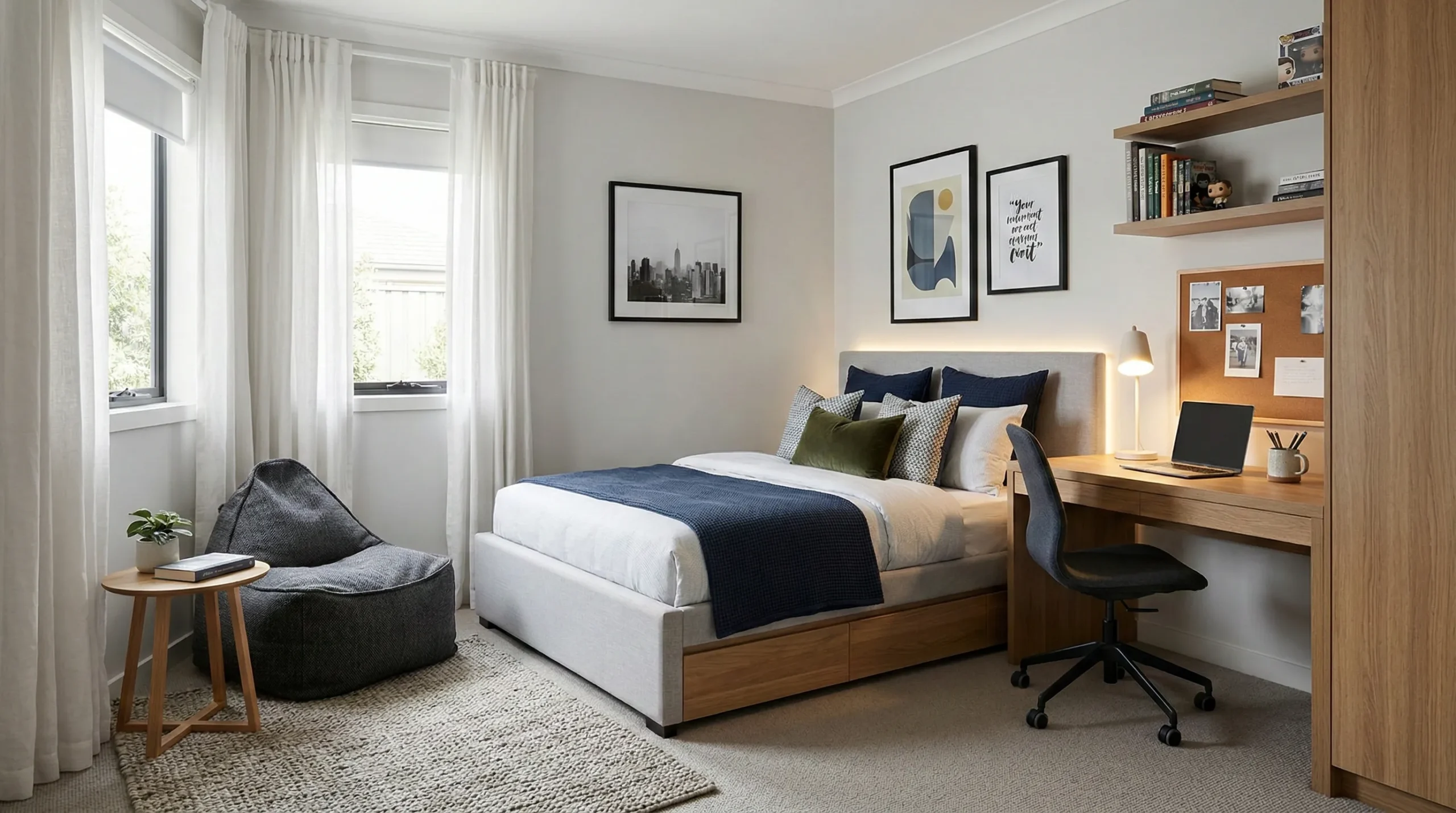
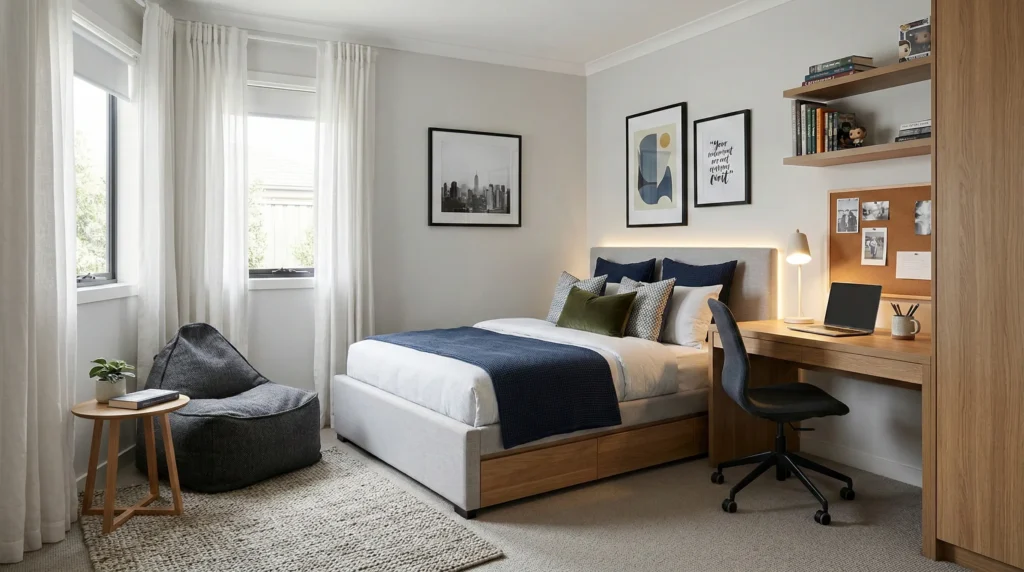
Placing the bed against a wall rather than in the centre of the room frees valuable floor space. This simple adjustment can make the room feel far more open.
Other helpful strategies include:
- placing the bed along the longest wall
- using beds with built-in storage drawers
- selecting a loft bed to create usable space underneath
Loft beds are particularly effective in small bedrooms because they create space for a desk or seating area below.
Creating a Functional Study Area
Study space becomes increasingly important during teenage years. A dedicated desk area encourages better focus and helps teenagers develop strong study habits.
In small bedrooms, desks should ideally be placed:
- near windows to benefit from natural light
- against walls to maximise floor space
- close to storage shelves for books and supplies
Wall-mounted shelves above the desk can provide additional storage without taking up valuable floor area.
Good lighting is also essential. Task lamps with adjustable brightness help reduce eye strain during long study sessions.
Smart Storage Solutions
Storage often presents the biggest challenge in small bedrooms. Teenagers accumulate clothing, books, electronics and hobby equipment, all of which require organised storage.
Effective storage solutions include:
- under-bed drawers
- wall-mounted shelving
- vertical wardrobes
- multi-drawer bedside tables
- storage benches
Making use of vertical space is especially important. Tall shelving units allow items to be stored upward rather than outward.
Closet organisers and drawer dividers can also help keep clothing and personal items tidy.
Multi-Functional Furniture
Multi-functional furniture is one of the most powerful tools for designing compact bedrooms.
Examples include:
- beds with built-in desks
- fold-down wall desks
- storage ottomans
- sofa beds
- wardrobes with integrated shelving
These designs combine several functions into a single piece of furniture, saving both space and money.
Many modern teen furniture collections are specifically designed with compact living in mind.
Creating a Relaxation Space
Teenagers often spend time relaxing in their bedrooms reading, listening to music or socialising with friends.
Even in small rooms, it is helpful to include a modest relaxation area. This might include:
- a comfortable lounge chair
- a beanbag
- a window seat
- a small rug with floor cushions
These simple additions create a welcoming environment without overwhelming the room.
Using Colour to Enhance Space
Colour choices play a significant role in how spacious a room feels.
Lighter colours tend to reflect light and make rooms feel larger. Soft tones such as pale grey, muted blue, warm beige and light sage green are popular choices for teen bedrooms.
Accent colours can be introduced through bedding, artwork or decorative accessories.
This approach allows the room to maintain a calm atmosphere while still reflecting the teenager’s personality.
Lighting Strategies for Small Bedrooms
Lighting can dramatically influence the perception of space.
A well-designed lighting plan might include:
- overhead lighting for general illumination
- task lighting at the desk
- bedside lighting for reading
- soft ambient lighting for relaxation
Wall-mounted lighting fixtures are particularly useful because they free up surface space on desks and bedside tables.
Encouraging Personal Expression
Teenagers value individuality and self-expression. Allowing them to personalise their bedroom helps them feel comfortable and confident in their space.
Ways to personalise the room include:
- artwork and posters
- display shelves for collectibles
- corkboards or pinboards
- customised bedding and textiles
Because tastes change frequently during teenage years, removable décor elements are often preferable to permanent design features.
Conclusion
Designing a small teen bedroom requires creativity, thoughtful planning and an understanding of how teenagers live and learn.
By combining strategic furniture placement, vertical storage, multi-functional furniture and carefully planned study zones, even modest bedrooms can become highly practical and comfortable spaces.
With the right approach, a small bedroom can support academic success, relaxation and personal expression while maximising every available square metre.