
Active kids don’t sit still. They climb, build, jump, sprawl, read, tinker, craft, and turn a calm bedroom into a base camp within minutes. That’s normal—and healthy. The problem is that standard bedroom furniture often isn’t designed for the way real kids actually live. In a smaller bedroom, “active kid energy” can quickly collide with limited space, creating mess, bumps, and constant frustration.
Space-saving furniture for active kids needs to do three things at once:
- It must be tough and safe.
- It must store gear fast and easily.
- It must leave open floor space for movement.
This isn’t about making a child’s room sterile. It’s about giving them a room that supports play, sport, creativity, and rest—without constant clutter.
What active kids need that quiet kids don’t
Some children have a naturally calmer style. Others are movers—sporty, energetic, always in motion. Space-saving furniture choices should match the child’s temperament.
Active kids usually need:
- A clear floor zone for play or stretching.
- Fast storage systems (not complicated organisers).
- Furniture that can handle impact (bags dropped, drawers slammed, kids climbing).
- A “landing zone” for daily gear (sports bag, hat, drink bottle, shoes).
- Flexible seating (beanbag, lounge style bed, floor cushions) without adding bulky furniture.
If you design for an active kid using delicate or fussy furniture, you’ll spend your life tidying and repairing. If you design with practical, robust, space-saving pieces, the room supports them and stays more under control.
Start by protecting floor space
In small rooms, floor space is the most valuable “feature.” Active kids need it even more. The goal is to store upward and inward (vertical storage and built-in storage), not outward (extra furniture scattered around the room).
The best space-saving principle is:
Use the bed and the walls to store things, so the floor stays free.
That means your biggest wins come from:
- Storage beds
- Loft beds
- Wall storage
- Slimline furniture
- Furniture that folds away
- Furniture that combines functions
Loft beds: the ultimate active-kid space saver
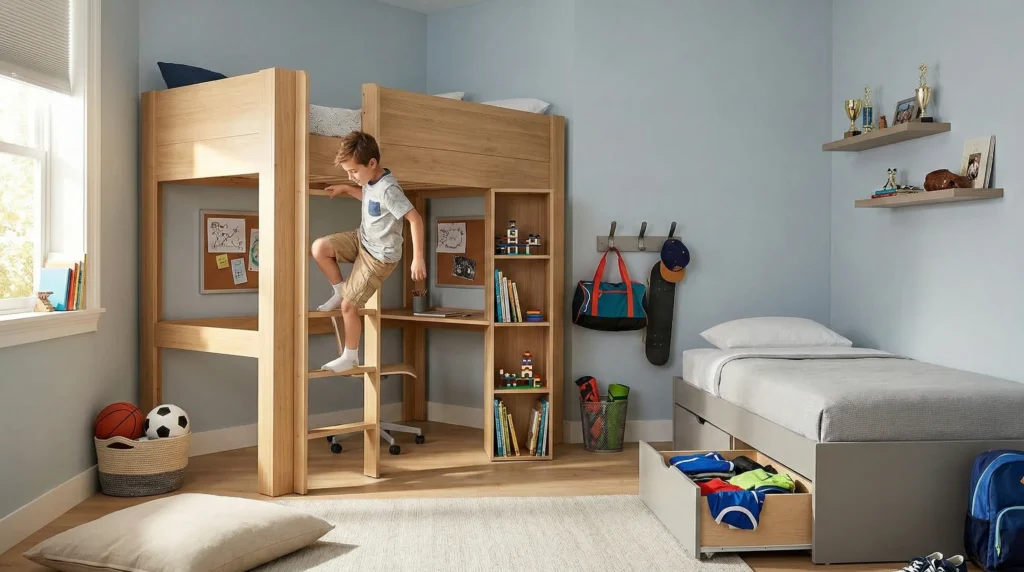
A loft bed is one of the best solutions for active kids in compact rooms because it creates a second level. The bed lives above, and the ground level becomes a functional zone.
Under a loft bed you can place:
- A desk and chair (study zone).
- A reading nook (beanbag and small shelf).
- Storage drawers and shelves.
- A play zone with a soft mat and toy storage.
- A sports gear station with hooks and baskets.
For active kids, the biggest advantage is that it creates a “contained” play and activity area without needing a larger room. Safety matters. You want stable construction, safe ladder access, and guard rails that suit the child’s age. The bed must feel solid—no wobble, no squeak. If it feels unstable, kids won’t relax in it, and parents won’t either.
Bunk beds for siblings or frequent sleepovers
If two kids share a room, bunks are a classic space saver. The floor area that would normally be taken by a second bed becomes play space or storage.
For active kids, bunks work best when:
- The bottom bunk has enough headroom to feel comfortable.
- There’s integrated storage (drawers, shelves).
- There are built-in lights or clip lights so kids can read without extra lamps.
- The ladder is easy and safe to use.
If sleepovers happen often, consider a trundle bed underneath instead of a second permanent bed. It keeps space free most of the time.
Storage beds built for real use
For active kids, storage beds are ideal because they hide clutter quickly. The key is to make storage easy—if it’s hard to access, it won’t be used.
The best options for active kids are:
- Under-bed drawers for daily items (sport shorts, favourite jumpers, toy categories).
- Lift-up storage for bulkier or less-used items (spare bedding, seasonal gear, larger toys).
- Trundle storage for sleepover bedding and pillow stacks.
Active kids generate “equipment.” Even if you don’t have much in the way of toys, you’ll have sports gear, craft gear, costumes, and random treasures. Under-bed storage is the most efficient place to put it.
The sports gear station: a small change that transforms the room
One of the most practical space-saving solutions for active kids is a dedicated sports gear station. Without it, gear ends up on the floor, on the bed, or in the hallway.
A good sports gear station can be done with:
- Wall hooks at child height (bag, cap, jacket).
- A slim shoe bench with storage underneath.
- A tall basket for balls or bulky items.
- A drawer or tub for small items (mouthguards, shin pads, swim goggles).
This isn’t fancy. It’s functional. It saves space because it stops gear from spreading through the room.
Fold-away desks and compact study setups
Active kids often struggle with staying still for long periods, but they still need a functional homework area. The best approach is to make the study zone compact and easy to reset.
Space-saving study furniture options include:
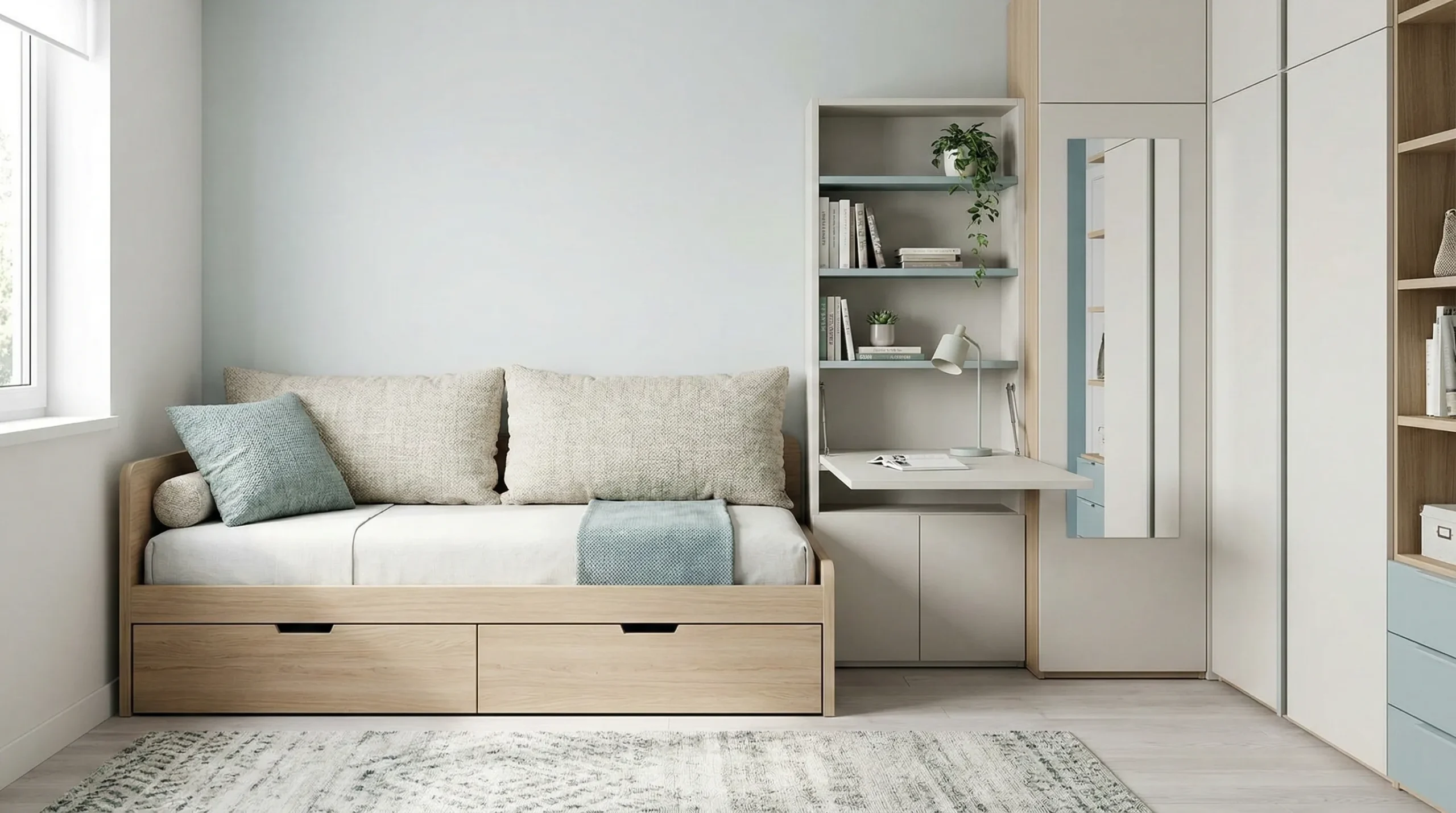
- Wall-mounted fold-down desks that close when not in use.
- Corner desks that use dead space efficiently.
- Desk + shelving units that combine storage and study in one footprint.
- A narrow desk ledge for quick homework tasks (especially in very small rooms).
A critical detail for active kids: desktop clutter kills focus. So you want storage that keeps pencils, books, and papers off the desk when not in use. Simple tubs, drawers, and shelves work better than complicated organisers.
Seating that doesn’t take over the room
A bulky armchair is a mistake in a small active kid’s bedroom. It steals floor space and becomes a clothes pile. But kids do need a comfortable place to chill.
Better space-saving seating choices include:
- A daybed setup (bed as lounge with cushions).
- A beanbag that can be shifted when play space is needed.
- A storage ottoman that doubles as seating.
- Floor cushions that stack away.
- A small rocking chair for younger kids (if it’s a priority item).
The key is flexibility: seating that moves or stores easily.
Storage that encourages kids to tidy quickly
Active kids tidy best when storage is simple and fast. If you require perfect folding, carefully labelled shelves, or complicated sorting, it won’t happen consistently.
Space-saving storage systems that work for active kids include:
- Large drawers (quick toss-in storage).
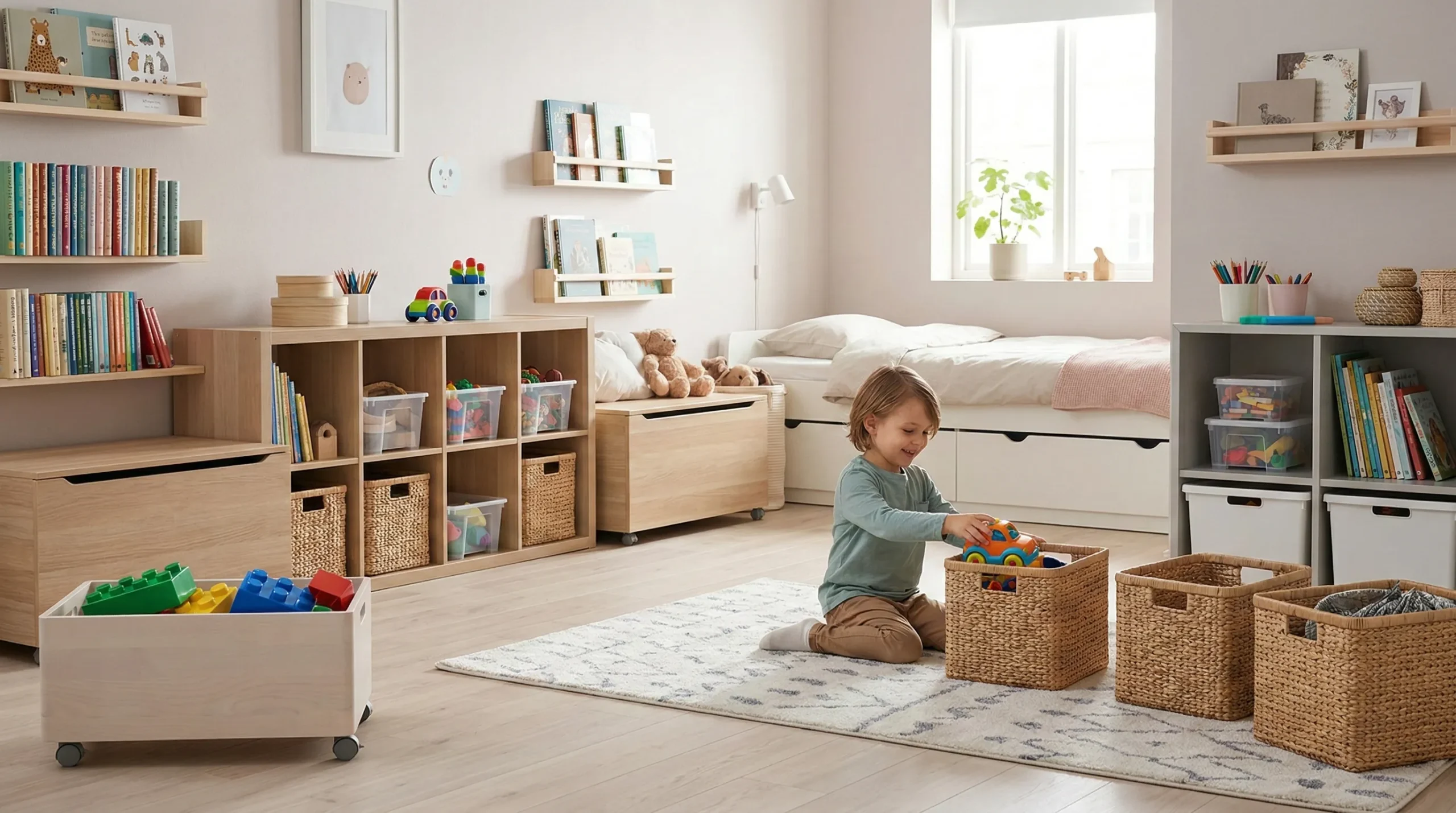
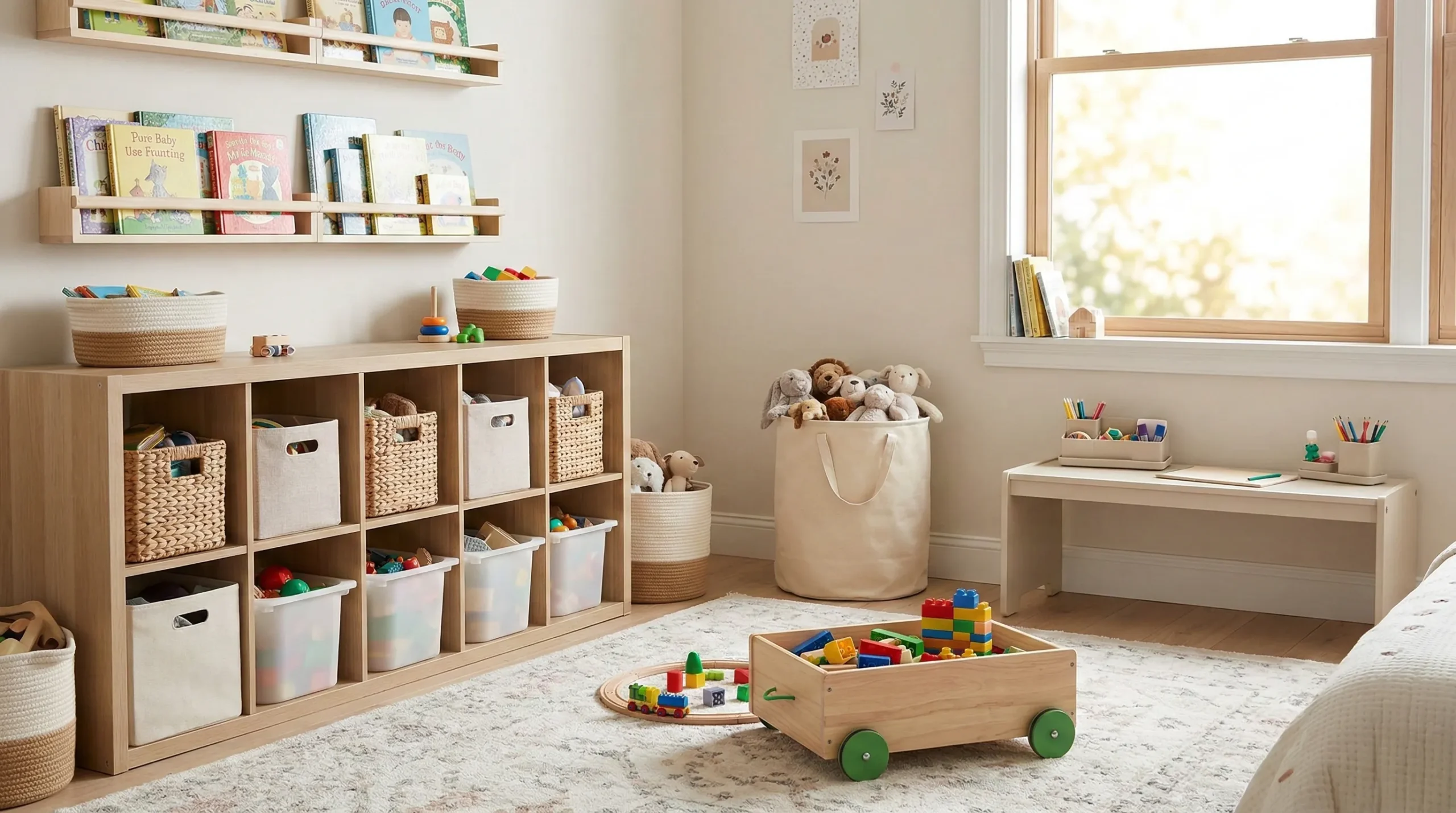
- Open cubbies with baskets (easy categories).
- Toy boxes with soft-close lids (safe and quick).
- Wall shelves for display items, not for daily storage.
- A “daily dump basket” for loose items that get sorted weekly.
This is practical parenting design: you’re building a room that supports good habits without expecting a child to behave like an adult.
Wall storage: keep the floor clear
Walls are underused in most children’s rooms. For active kids, wall storage is gold because it keeps the floor open.
High-value wall storage includes:
- Hooks for bags, hats, dress-ups, and jackets.
- A wall shelf near the bed for bedtime books and a night light.
- A pinboard or magnetic board for school notes and art.
- Slim wall shelves for trophies or display pieces.
- A wall-mounted toy/book sling for younger kids (easy access).
Wall lighting is also a space saver. Sconces or clip lights remove the need for a lamp on a bedside table, which frees up surface space and reduces clutter.
The “activity zone” concept: define a space, don’t fight the chaos
Active kids need a zone where it’s okay to build Lego, spread out craft projects, or practise a new skill. In a small bedroom, you can still do this by defining an area.
Space-saving ways to create an activity zone:
- A soft foldable mat that can be stored under the bed.
- A low table that slides under a desk when not in use.
- A rolling craft trolley that moves into the zone, then rolls away.
- A storage bench that opens to hold activity items.
The goal is containment. A defined activity zone stops the whole room becoming the activity zone.
Furniture edges, stability, and safety for energetic kids
When kids are active, furniture must be safe and sturdy. Space saving is pointless if the furniture isn’t fit for daily living.
Practical safety and durability considerations:
- Rounded edges on frequently bumped surfaces.
- Stable tall furniture anchored to the wall (important in any child’s room).
- Soft-close drawers where possible.
- Robust drawer runners and hinges.
- Non-slip feet or stable bases for lighter pieces.
- Materials and finishes that handle scuffs and cleaning.
A space-saving piece often gets used more intensely. A storage bed’s drawers might be opened dozens of times a week. That’s why build quality is essential.
The “one in, one out” rule supported by smart storage
Active kids often collect “stuff”: sports gear changes by season, hobbies rotate, and toys come and go. Space saving furniture helps, but you also want a simple system that stops overflow.
A practical approach is to build storage with defined capacity:
- One tub for balls (when it’s full, something goes).
- One shelf for trophies and display items.
- One drawer for craft supplies.
- One basket for soft toys.
This turns the room into a self-regulating system. Without defined storage limits, clutter grows into every corner.
Compact wardrobes that actually work
Wardrobes in kids’ rooms often become chaos because they’re not organised internally. Space saving furniture here is less about the outer wardrobe and more about the inside.
A wardrobe that works for active kids includes:
- Lower hanging space for everyday clothes (kids can reach).
- A few drawers for small items.
- Shelves for folded items or tubs.
- A top shelf for seasonal items or less-used gear.
- A hamper or laundry bag system that’s easy to use.
If the wardrobe isn’t functional, clothing will end up on the floor and the bed. That instantly reduces usable space.
A space-saving bedroom setup for an active primary school child
A compact room for an active child can work beautifully with:
- A single storage bed with drawers.
- A wall hook station (bag, hat, jacket).
- A slim shoe bench with storage.
- A desk + shelf combo unit.
- A large basket system for toys/gear.
- A foldable activity mat stored under the bed.
- A beanbag or floor cushion that moves easily.
This setup keeps the centre of the room clear. That’s the whole goal: space to move.
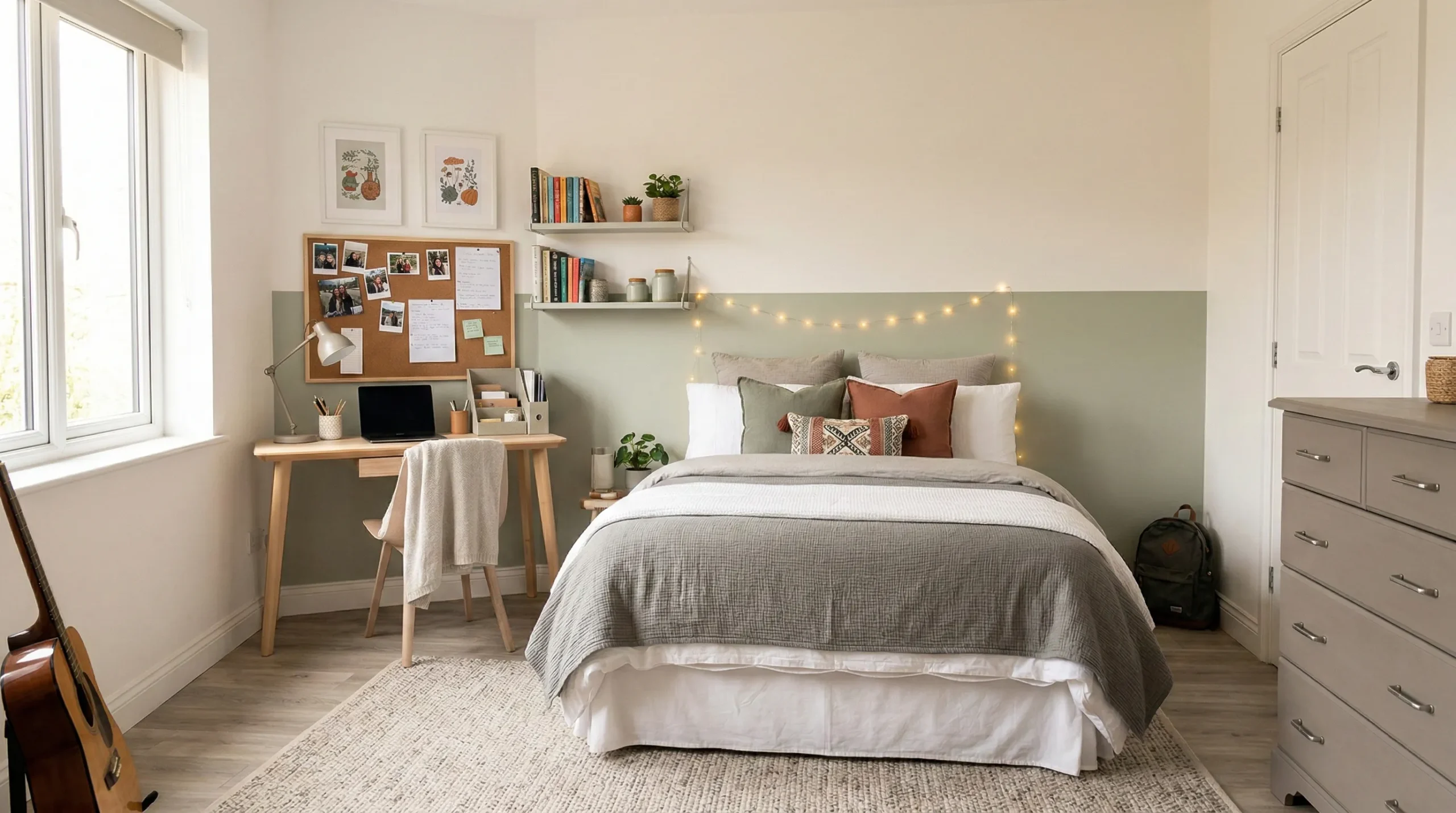
A space-saving setup for an active teen
Teens often have different needs: gym gear, school bags, tech, and a desire for privacy and comfort.
A compact teen room can work with:
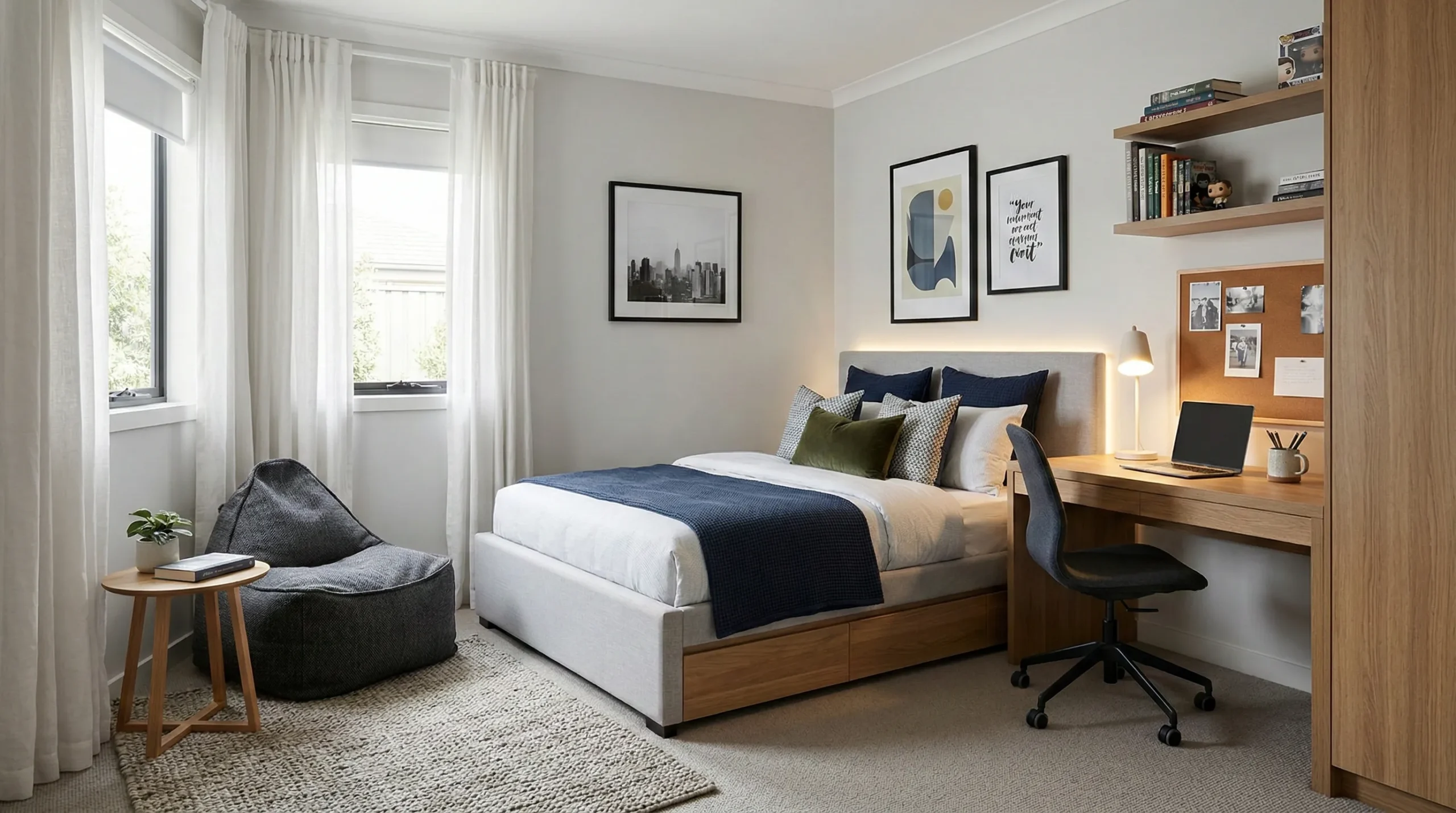
- A daybed-style bed with storage drawers (bed becomes lounge).
- A compact desk with integrated shelving.
- A wardrobe with internal drawers so no tallboy is needed.
- A wall-mounted charging shelf or bedside shelf.
- A dedicated gear station (hooks + basket + shoe bench).
- One flexible seating piece (beanbag or storage ottoman).
Teens are more likely to keep a room tidy if it feels mature and functional. Multi-use furniture helps the room feel like “their space” rather than a child’s room.
Common mistakes to avoid
These are the mistakes I see repeatedly in compact rooms for active kids:
- Too many small storage pieces instead of a few strong systems.
- Open shelving everywhere, creating visual clutter and more mess.
- Bulky furniture that steals floor space.
- Storage that’s too high or too complicated for the child to use.
- No landing zone for daily gear.
- A bed that doesn’t provide storage, forcing extra furniture into the room.
Avoid these, and you’ll feel the difference every day—especially in the morning rush.
The best space-saving furniture is the furniture that gets used
A room only works if the child uses the systems you design. So the final test is behavioural, not just aesthetic. Ask:
- Can my child put things away in under two minutes?
- Can they reach the storage without help?
- Is there a clear place for the items that usually end up on the floor?
- Does the room still have open space for movement?
- Will the furniture survive daily life?
Space saving furniture isn’t about a perfect showroom. It’s about a bedroom that supports an active child’s real life: sleep, play, learning, and growth—without the constant fight against clutter.
See more at www.maisonclairdelune.com.au.