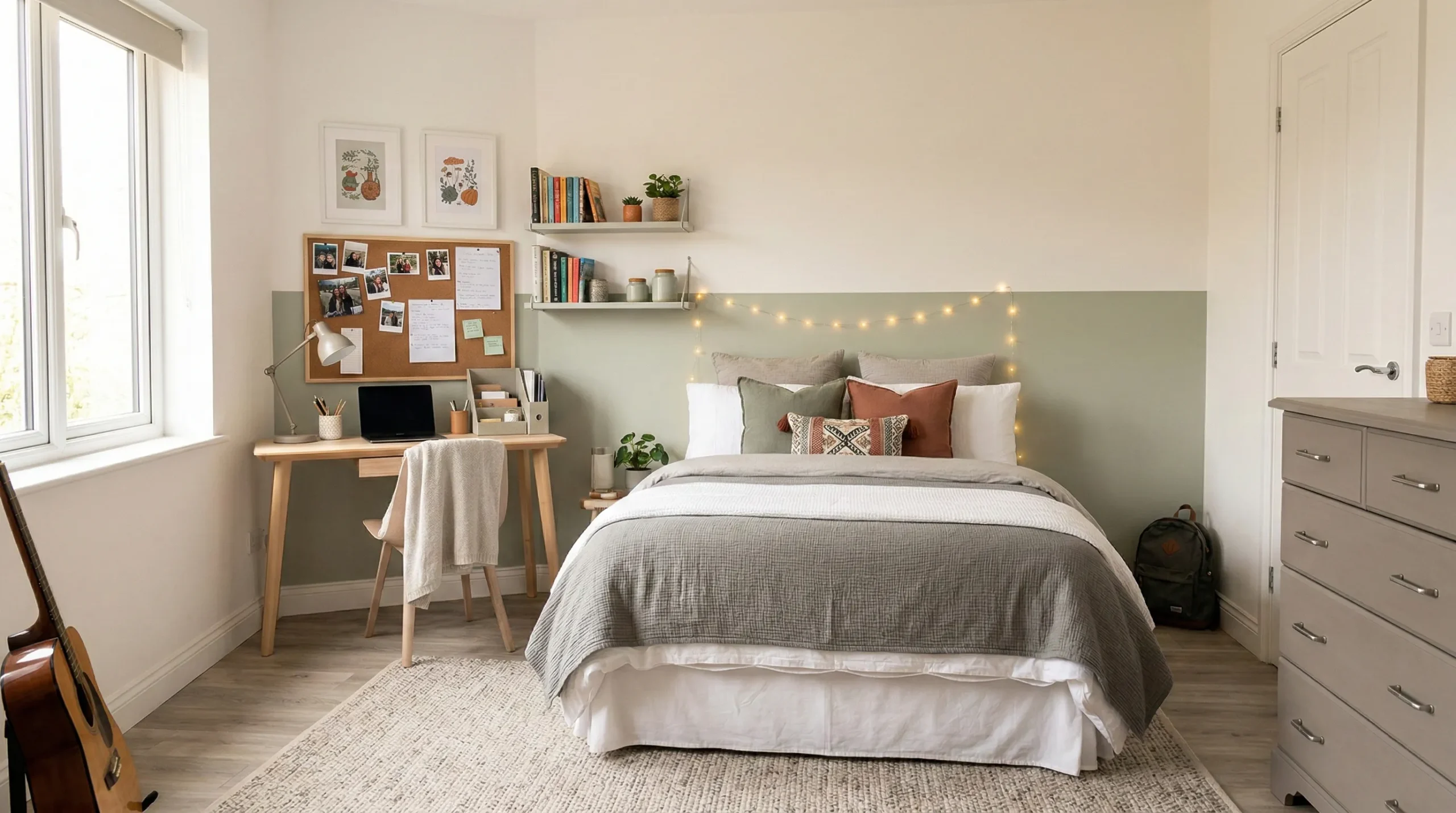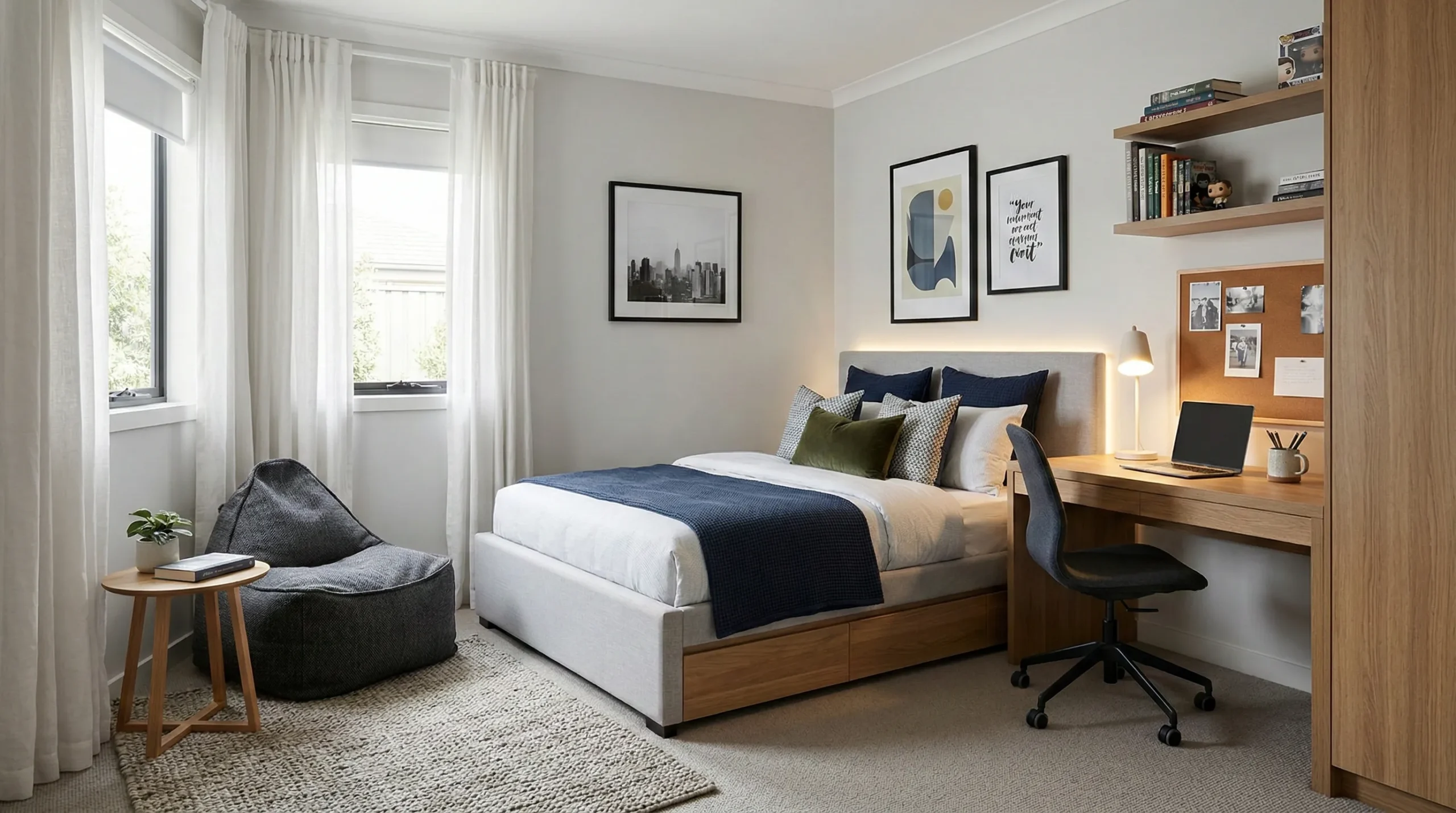
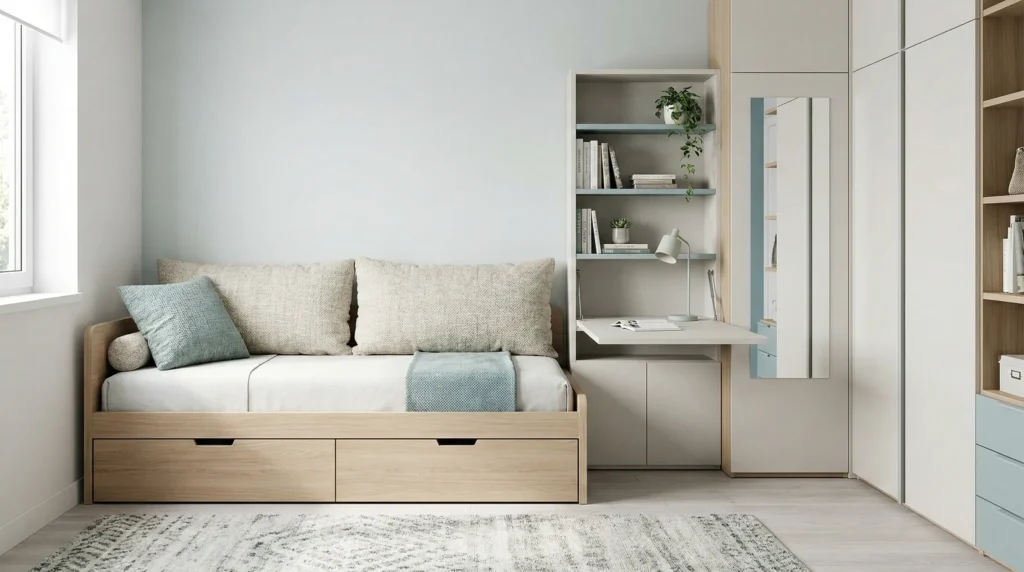

Compact bedrooms can be a blessing and a nuisance at the same time. They’re cosy, easy to warm in winter, and they stop a house from feeling like a museum. But they can also turn into a daily obstacle course: a bed that blocks drawers, a desk that steals walkway space, a wardrobe door that clips the bed corner, and a chair that has nowhere sensible to live. The answer isn’t “buy smaller stuff” (that often feels flimsy and temporary). The answer is to choose multi-purpose furniture—pieces that do two or three jobs properly, every day, without looking like a compromise.
I’ve helped families and homeowners set up compact rooms for children, teens, guests, and small adult bedrooms where every centimetre matters. The biggest difference always comes from planning the room like a system, not a collection of individual items. When multi furniture is chosen well, the room feels bigger, stays tidier, and works better for real life—sleep, study, storage, and downtime.
What “multi furniture” really means (and what it doesn’t)
Multi furniture isn’t gimmicky furniture. It’s not the wobbly contraption that turns into six things you never use. Good multi furniture is simple: it reduces the number of separate pieces a room needs by combining functions intelligently.
In a compact bedroom, the most valuable combinations are:
- A bed with built-in storage that replaces a chest of drawers.
- A bed that becomes a day lounge so you don’t need an extra sofa chair.
- A desk that folds away or doubles as a dressing table.
- A wardrobe system that includes drawers, shelves, hanging space, and a mirror, so you don’t need extra storage items.
- A bedside solution that also charges devices, stores books, or acts as a mini shelf.
The rule is straightforward: if a piece “does two jobs”, it must do both jobs well. A desk must still be a proper desk. A bed must still be stable, quiet, and comfortable. A storage system must still open easily and not turn into a wrestling match.
Start with the room’s non-negotiables
Before choosing furniture, write the room’s must-haves. In compact bedrooms, you’ll usually have these needs:
- A proper sleep setup (bed and bedside essentials).
- Clothing storage (not just a rail—real storage for folded items).
- A place for daily “bits and pieces” (books, chargers, school items, hairbrushes, or hobby gear).
- A study or work surface (for kids and teens especially).
- A clear walking path (so mornings are smooth and the room feels calm).
The biggest mistake is buying a bed first without thinking through what else must fit. The bed is the largest item, yes—but the right bed can replace two other large pieces, and that’s the whole point of multi furniture.
The bed as the room’s main storage engine
In compact bedrooms, the bed is your best opportunity to gain storage without visually crowding the space.
Storage beds with drawers are brilliant when you have decent clearance on one or both sides. They can replace a tallboy or a chest of drawers entirely. The key is to check drawer depth and access: if the drawer only opens halfway because it hits a wall, you’ll end up using it for junk. For tight rooms, drawers that open on the “long” accessible side are usually the winner.
Lift-up storage beds (ottoman style) are ideal when side clearance is limited, because the storage is accessed from the top. They suit bedding, out-of-season clothing, sports gear, and bulkier items. The quality of the lifting mechanism matters. A good system feels balanced and safe—especially if a teen will use it daily. A poor system becomes heavy, awkward, and gets ignored.
Trundle beds and roll-out guest beds are another form of multi furniture: one bed becomes two when needed. If you have siblings sharing or frequent sleepovers, this can eliminate the need for a larger room or extra bed. The practical detail here is mattress height. A trundle usually requires a slightly slimmer mattress, and it needs to roll easily on your flooring type.
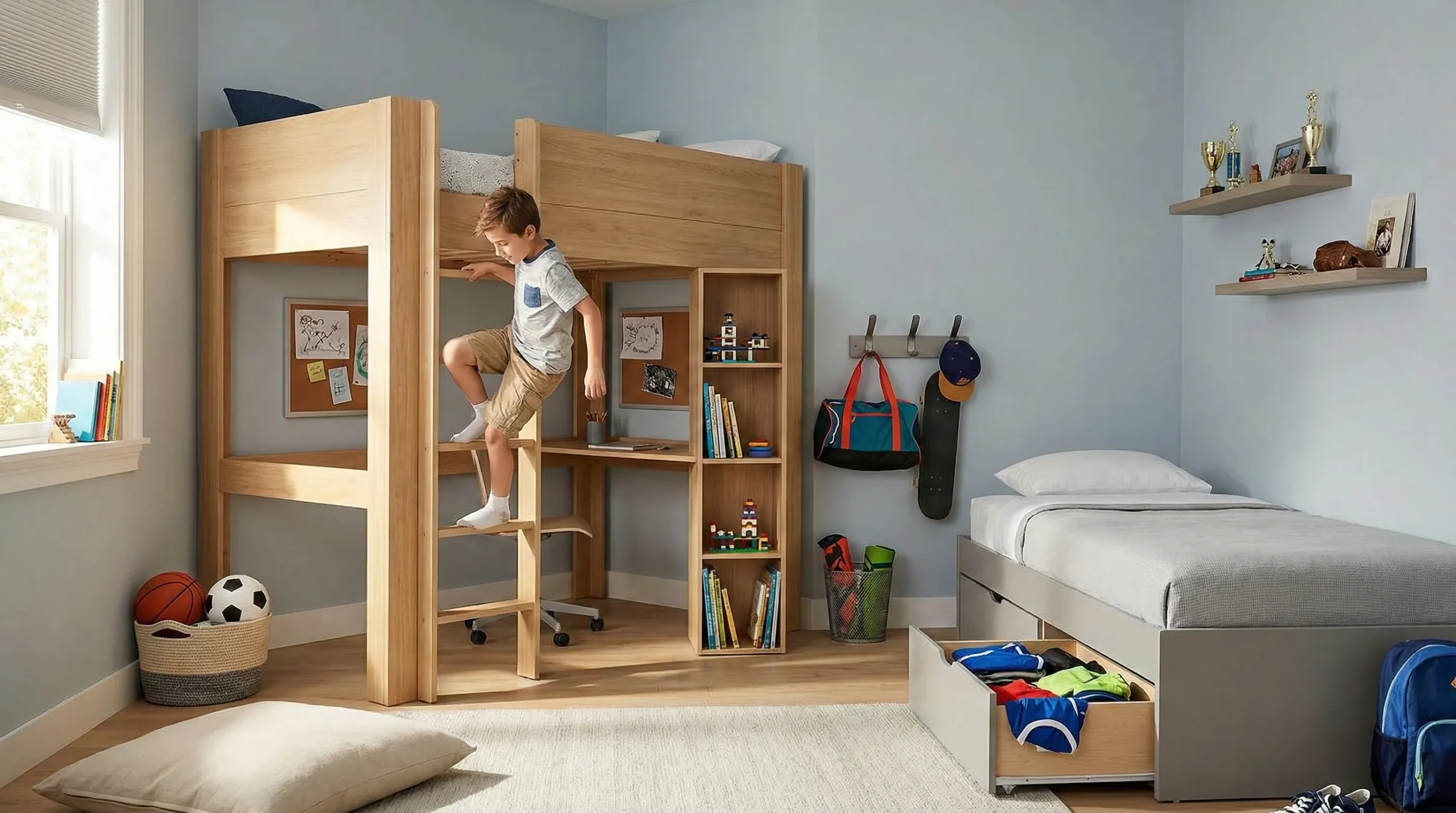
Bunk beds with integrated storage are not only for small children. In teen rooms or shared rooms, a quality bunk (or loft bed) can open a whole “ground level” area for desks, drawers, and shelves. Loft beds in particular can be a game changer for compact rooms because they create a functional zone underneath. The key is stability and safe access. If it’s squeaky or feels flimsy, it won’t get used comfortably.
The daybed concept: sleeping plus lounging without extra furniture
A compact bedroom often tries to serve as a mini living room—especially for teens. If you add an extra chair or small couch, the room can instantly feel cramped. This is where the daybed layout shines.
A daybed is essentially a bed styled and supported so it functions as seating in the day. It means:
- The bed is against a wall.
- It has a sturdy backrest effect using cushions.
- The bedding is chosen so it looks tidy (not messy doonas piled up).
- The bed becomes the lounge chair for reading, scrolling, chatting with friends, or gaming.
This eliminates the need for a bulky armchair. In a compact bedroom, removing one extra piece of furniture can be the difference between a room that feels calm and one that feels cluttered.
Desk solutions that don’t steal the floor
Kids and teens need a desk more than ever, but the typical desk is a space hog if you’re not careful. Multi furniture solves this by either “borrowing” space from another piece or folding away.
Wall-mounted fold-down desks are excellent for tight rooms. When the desk is closed, it becomes a slim cabinet. When open, it provides a functional work surface. The trick is making sure there’s still storage nearby for stationery and school items, otherwise the desk becomes a dumping ground.
Desk + shelving combinations are strong performers because they use vertical space. In compact rooms, you want height, not width. A desk integrated into a shelving unit keeps everything in one footprint: books, baskets, chargers, and school gear. It also helps keep the desktop clear because storage is literally right above it.
Dressing table + desk hybrids are ideal in teen rooms. Instead of having a separate desk and separate dressing table, one surface does both jobs. Add a mirror (wall mounted or within a unit) and a small organiser. The result: one footprint, two daily uses.
Bedside desk extensions can work in very tight rooms: a narrow surface that runs alongside the bed wall and becomes both bedside table and study ledge. This is particularly good for laptop-based homework. For handwriting and larger projects, you still want enough depth, but for many teens a slim desk ledge is actually enough for day-to-day.
Wardrobes that act like multiple furniture pieces
A wardrobe can be either a simple hanging space that forces you to add extra drawers, or it can be a full storage system that removes the need for other furniture.
In compact bedrooms, aim for a wardrobe layout that includes:
- Hanging space for everyday clothing.
- Shelves for folded items.
- Drawers for underwear, socks, and smaller pieces.
- A top shelf for bulkier or seasonal items.
- A mirror integrated into the door or nearby wall.
When wardrobes are well designed, you can often eliminate a tallboy. That’s huge in a small room, because tallboys take floor area and can visually dominate the space. If you do need a tallboy, choose one that’s narrower and taller, and position it where it doesn’t block light or walkways.
Bedside furniture that earns its keep
A bedside table in a compact bedroom must do more than hold a phone and a glass of water. It should support the room’s organisation.
High-function bedside options include:
- A narrow bedside unit with two drawers (more useful than one open shelf).
- A wall shelf with a small drawer underneath to keep the floor clear.
- A bedside unit that includes charging, cable management, and a book shelf.
- A slim trolley-style bedside piece that can move slightly if needed.
In a compact room, the floor is precious. Anything that lifts storage up (wall mounted shelves, slim vertical units, floating bedside options) makes the room feel more open.
Built-in style storage without the built-in cost
True built-ins are wonderful, but many families don’t want to commit to a permanent joinery solution—especially in a child’s or teen’s room. The good news is you can get a “built-in feel” with modular furniture.
Think in terms of:
- A tall cabinet with adjustable shelves (acts like built-in storage).
- A modular shelving system that can be reconfigured as needs change.
- A storage bench at the end of the bed (acts like built-in seating + storage).
- Stackable drawer units inside wardrobes (custom interior without renovations).
The goal is a cohesive look: fewer separate items, more unified lines, and storage that looks intentional.
The under-bed zone: use it properly or it becomes chaos
Under-bed storage is only good if it’s managed. Loose items shoved under the bed create dust traps and stress. The best systems are:
- Built-in drawers (the cleanest solution).
- Matching storage boxes with lids (uniform look and easy retrieval).
- Rolling under-bed containers that glide on your flooring.
- Clearly labelled categories (sports, winter clothes, spare bedding, craft supplies).
The secret is to store “less often used” items under the bed. Daily items should live in drawers, shelves, or wardrobes where they’re accessible without a full production.
Vertical space is your friend, but don’t overdo it
Small rooms need vertical thinking. But if you cover every wall in open shelves, you’ll create visual clutter and the room will feel busy.
A practical approach:
- Use one main vertical storage area (desk + shelving or a tall bookcase).
- Keep lower zones calmer (bed, drawers, clear floor).
- Use closed storage (doors/drawers) for messy categories.
- Use open shelves only for a curated selection: a few books, one or two decor pieces, and a basket for loose items.
Closed storage is underrated. It makes a room instantly feel calmer because the eye doesn’t have to process everything.
Multi furniture layout rules that work in real rooms
Here are layout principles that consistently work in compact bedrooms:
- Put the bed against a wall if the room is tight. A “bed floating in the middle” wastes access space.
- Keep a clear line from the door to the bed. If you have to sidestep furniture, the room feels smaller.
- Place the desk near natural light if possible. It improves focus and makes the room feel brighter.
- Avoid bulky bedside tables. Go slim, wall mounted, or integrated.
- Choose one feature piece (often the bed) and keep the rest simple, cohesive, and space-efficient.
If the room has one awkward corner, turn it into a purposeful storage corner with a tall cabinet or shelving unit. Awkward corners become dead zones when they’re left empty without a plan.
Materials and construction matter more in multi furniture
Multi furniture does more work. It gets opened, folded, lifted, moved, and used in multiple ways. That’s why quality matters more here than in single-purpose furniture.
Look for:
- Solid frames and stable joinery.
- Smooth runners on drawers (soft close is a bonus).
- Safe, reliable lifting mechanisms (for ottoman beds).
- Durable finishes that handle daily use.
- Hardware that doesn’t loosen quickly.
A compact room already carries a mental load—if furniture constantly sticks, squeaks, or breaks, it adds stress. Good multi furniture should feel effortless.
Styling a compact room so it looks bigger
Even the best multi furniture won’t feel right if the room looks visually crowded. Styling matters.
- Use a consistent colour palette to reduce visual “noise”.
- Match finishes where possible (timber tones, metal accents).
- Use under-bed drawers or boxes that blend in, not bright mismatched colours.
- Choose slimline lighting (wall sconces or clip lights) instead of bulky lamps.
- Use curtains that hang higher and wider to make windows feel bigger.
- Keep the floor as clear as possible—floor space equals calm.
Mirrors help, but only if they’re positioned to reflect light, not clutter. A mirror on a wardrobe door often works well in small bedrooms because it doesn’t consume extra wall space.
Multi furniture for different ages
Compact bedrooms evolve as kids grow, and furniture choices should allow that.
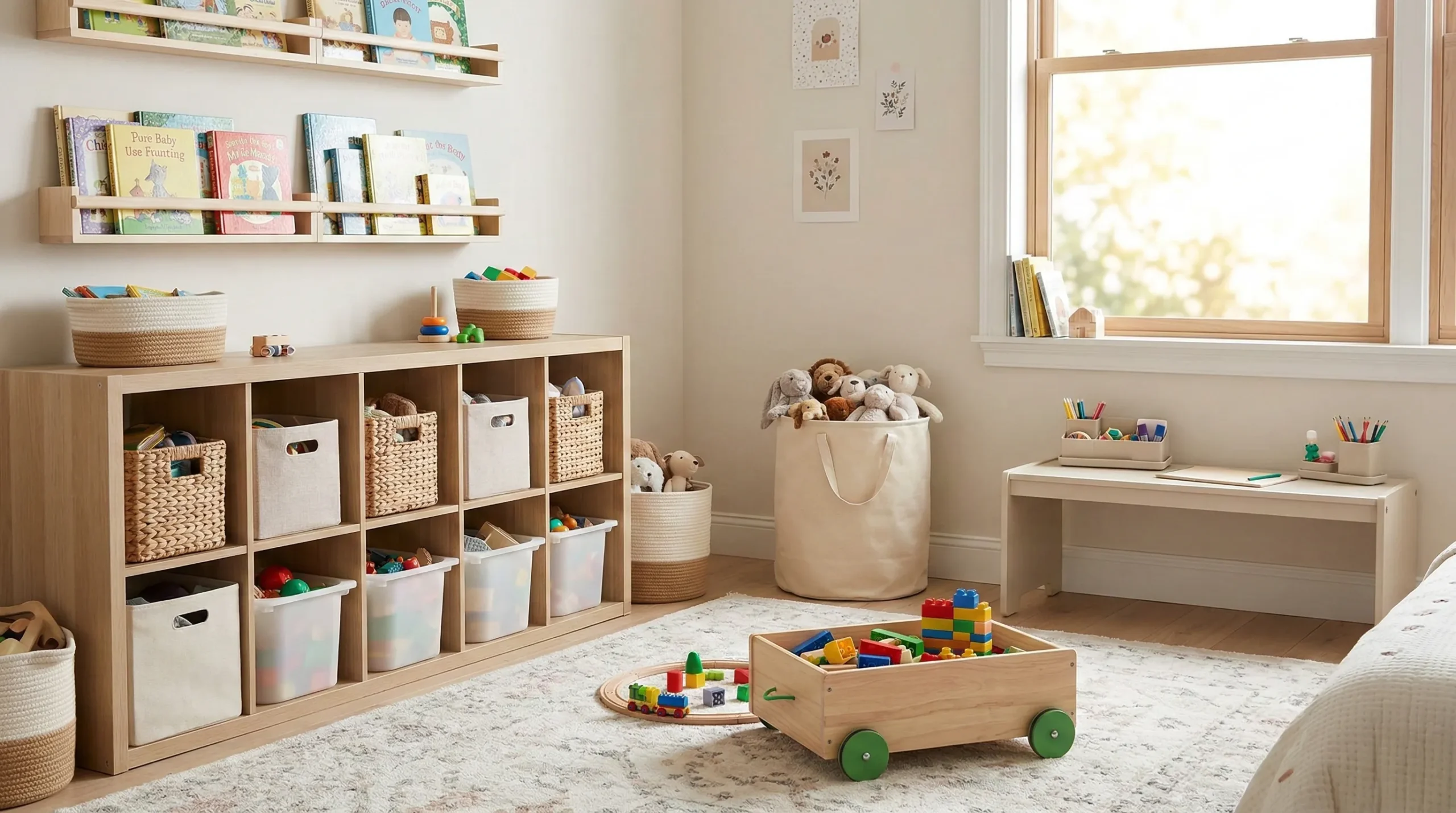
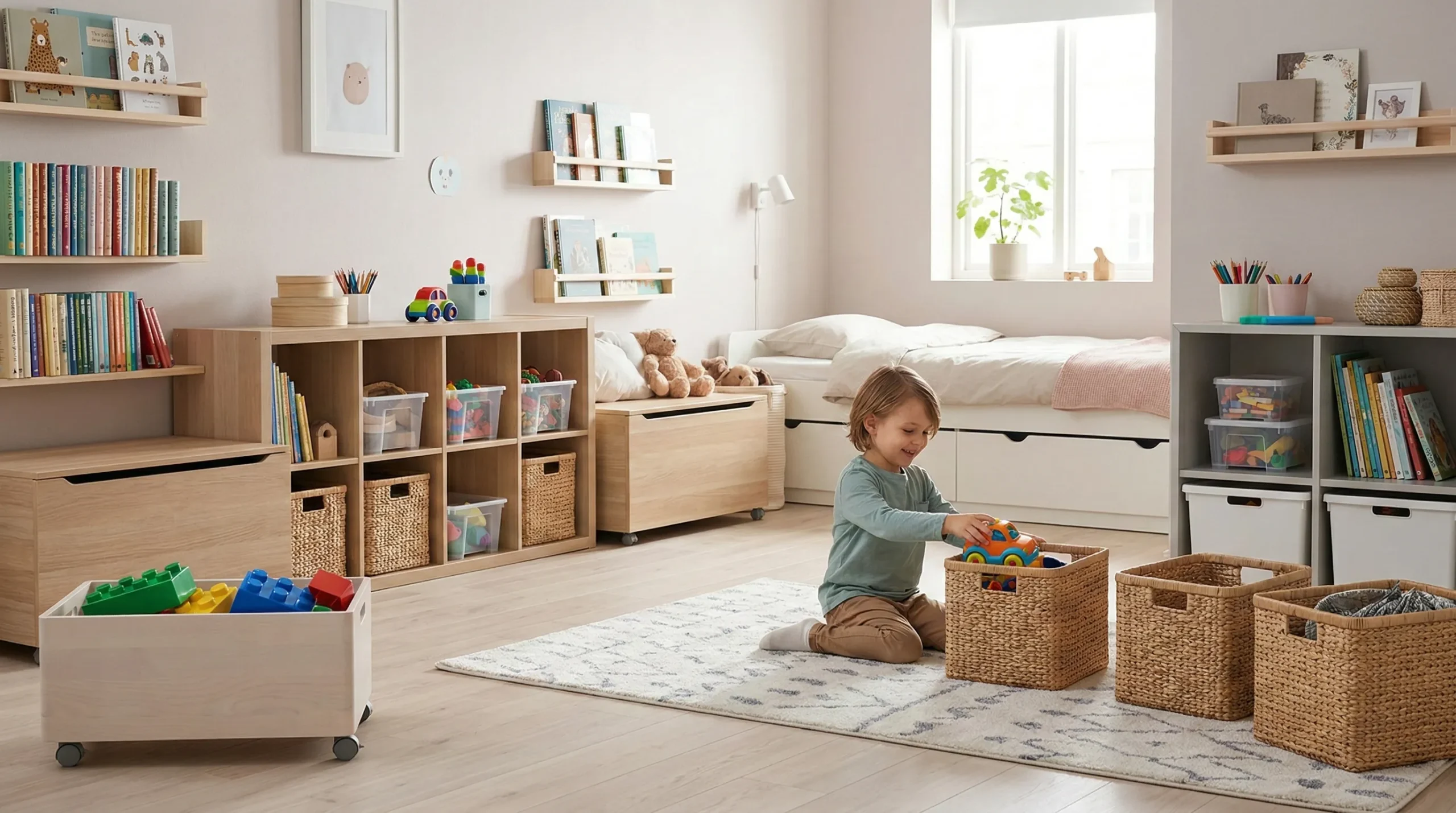
- For younger children: focus on safety, rounded edges, and storage that encourages independence (low drawers, easy baskets).
- For older kids: add desk capacity and better organisation for school.
- For teens: prioritise a lounge-style bed setup, a proper workspace, and wardrobe storage that reduces mess.
Multi furniture is at its best when it grows with the child instead of forcing a full refit every few years.
The “compact bedroom checklist” before you buy
Before purchasing, run through this practical checklist:
- Does this piece replace at least one other piece I would otherwise need?
- Can it be used easily every day, without moving other furniture?
- Is the storage accessible (drawers open fully, lids lift safely)?
- Does it suit the age and height of the user?
- Will it still work in three years?
- Is the quality strong enough for repeated use?
- Does it help the room feel calmer, not busier?
If a “multi” piece only works in theory and becomes annoying in practice, it won’t be used—and the room will become clutter again.
A simple example setup for a compact teen bedroom
A compact teen bedroom can work beautifully with just a few smart choices:
- A daybed-style single bed with storage drawers underneath.
- A desk integrated into a shelving unit (vertical storage).
- A wardrobe with drawers inside (no tallboy needed).
- A wall shelf as a bedside unit (freeing floor space).
- One storage bench at the end of the bed for shoes/bags or extra bedding.
That’s it. Four or five pieces can replace seven or eight separate items, and the room feels open instead of crammed.
Multi furniture isn’t about squeezing life into a tiny box. It’s about making a compact bedroom feel capable, calm, and well designed—like it was planned that way from the start.
See more at www.maisonclairdelune.com.au.