
Furniture is one of the few things we buy that should last for many years, sometimes decades. Yet in modern times, disposable furniture has become common. Many households are now used to buying a bed, desk, or storage unit that only lasts a few years before it loosens, warps, chips, or simply looks tired and outdated.
This shift has been driven by cheap imports, flat-pack convenience, and fast fashion thinking applied to home interiors. But when you look closely, disposable furniture often costs more in the long run—financially, practically, and emotionally.
Long life furniture, by contrast, is built to endure. It is designed with quality materials, solid construction, and timeless styling so it can grow with a family, survive daily use, and remain attractive for years.
If you are furnishing a child’s bedroom, a teen’s room, or any family space, the difference between long life furniture and disposable furniture becomes even more important. Children and teenagers are hard on furniture. They climb, drop items, drag chairs, and change their habits quickly. If the furniture is poorly built, it will not survive.
What is disposable furniture?
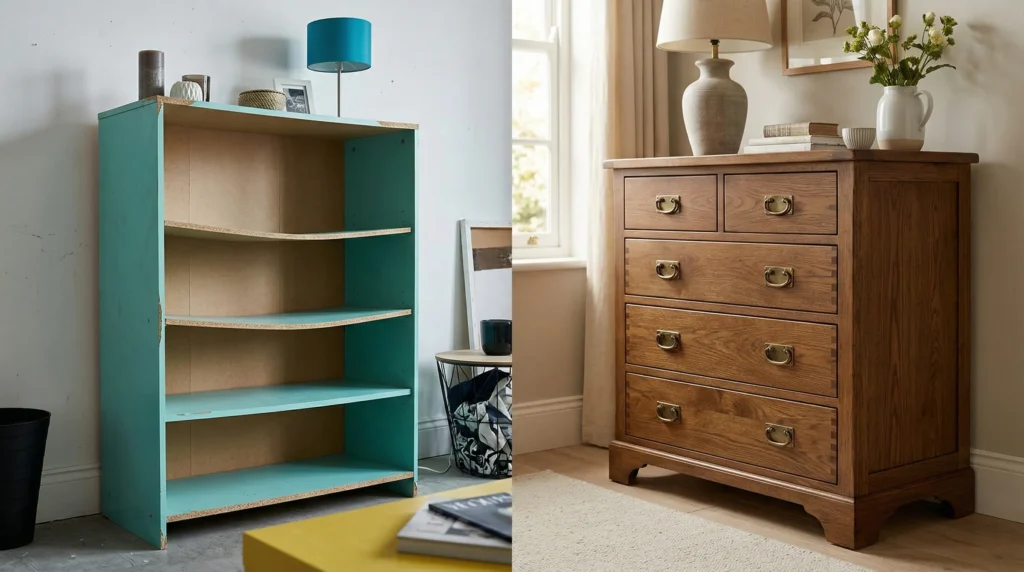
Disposable furniture is furniture designed primarily for short-term use. It is usually made to meet a price point rather than a quality standard. It often has:
- Thin particle board panels.
- Low-quality veneer finishes that chip easily.
- Weak joinery and minimal reinforcement.
- Cheap hinges, runners, and hardware.
- Poor weight-bearing strength.
- A “temporary” feel even when new.
Disposable furniture is often marketed as “affordable,” but the real cost is hidden. When furniture breaks after two or three years, the customer buys again. That means the cycle continues. Disposable furniture is not always obvious at first glance. It can look stylish online. But once it is assembled and used daily, weaknesses show quickly.
What is long life furniture?
Long life furniture is designed to remain functional and attractive for many years. It is built with the mindset that it should survive daily life, not just look good in a showroom. Long life furniture typically includes:
- Strong internal frames.
- Better materials such as hardwood, plywood, strong engineered timber, or reinforced composite.
- High-quality finishes that resist scratches and stains.
- Superior hinges, runners, and connection systems.
- Thoughtful design that reduces stress on weak points.
- Classic styling that does not date quickly.
This is the kind of furniture that can move from one child to the next, or transition from childhood into teenage years, and even into adulthood.
Why disposable furniture has become so common
Disposable furniture has grown in popularity because of a few key factors:
- Low upfront price: People often shop by budget first, especially when furnishing multiple rooms.
- Flat-pack convenience: Many disposable items are easy to transport and assemble quickly.
- Online shopping culture: Furniture is now purchased based on photos and short descriptions, which hides construction quality.
- Fast-changing trends: Some buyers prefer trendy furniture that matches the current look, even if it doesn’t last.
The problem is that families often regret these purchases later, especially when the furniture breaks under normal use.
The real cost comparison: long life vs disposable
Disposable furniture may cost half as much initially, but if it needs replacing every few years, the cost quickly adds up. For example: A cheap bed frame might cost $450 and last 3 years. A long life bed might cost $1,200 and last 15 years. Over 15 years, the disposable option might require replacement 4–5 times. That becomes $1,800 to $2,250, not including delivery, assembly, and disposal costs. So the “cheap” bed becomes the expensive bed. Long life furniture is an investment, and it pays off over time.
Durability and safety in children’s furniture
In children’s and teen bedrooms, durability isn’t just a luxury—it is a safety issue. Disposable furniture can fail in dangerous ways:
- Bed slats collapse.
- Bunk ladders loosen.
- Drawer runners break and jam.
- Shelves bow under weight.
- Sharp chipped corners develop.
- Fasteners loosen and wobble.
Long life furniture is designed to withstand active use. It is reinforced in stress points and built with safer joinery. Parents often don’t realise how important this is until a bed becomes unstable or a bunk bed starts creaking and shifting.
Long life furniture supports changing needs
Children grow quickly. A room that works for a 6-year-old will not suit a 13-year-old. Disposable furniture is often built for a narrow life stage. It looks cute for younger kids but becomes unsuitable later. Long life furniture is usually designed with more timeless appeal. A strong desk, a quality bed frame, and durable storage can remain suitable through childhood, teenage years, and beyond. This is why many families who buy long life furniture find themselves replacing less and enjoying more consistency.
Environmental impact: the hidden damage of disposable furniture
Disposable furniture creates waste. When it breaks, it is often not worth repairing. It ends up in landfill. Much of this furniture is made with: Low-quality particle board, heavy glues and resins, plastic-coated veneers, and non-recyclable mixed materials. This makes it difficult to recycle properly. Long life furniture, by contrast, reduces waste simply because it lasts. Buying one quality bed instead of five cheap ones is a major environmental benefit. For many modern households, this is an important consideration.
Repairability: a key difference
Disposable furniture is often impossible to repair. Once a panel cracks or the joints loosen, it becomes unstable. Long life furniture can often be repaired or refreshed. A good timber piece can be tightened, refinished, or upgraded. Hardware can be replaced. Surfaces can be restored. This means long life furniture remains useful, rather than being thrown away.
Style longevity: timeless beats trendy
Disposable furniture often follows short-lived trends. It may look modern today but dated in three years. Long life furniture tends to use timeless design elements: Balanced proportions, classic shapes, neutral finishes, and quality materials that age gracefully. This makes it easier to redecorate around the furniture as tastes change. The furniture remains a stable foundation.
Comfort and feel: the difference you notice daily
One of the biggest differences is how furniture feels. Disposable furniture often feels light, hollow, and unstable. Long life furniture feels solid, secure, and reliable. That may sound like a small thing, but in daily life it matters. A sturdy bed doesn’t creak. A solid chair doesn’t wobble. A well-built drawer glides smoothly. Long life furniture creates a sense of calm and confidence in a home.
Why long life furniture is smarter for resale value
Quality furniture holds value. Cheap furniture has almost no resale value because buyers assume it is worn out. If you buy long life furniture, you can often: Resell it later, pass it down to another child, move it into a guest room, or keep it for decades. That means the furniture becomes an asset rather than a cost.
How to identify long life furniture before you buy
Many people struggle to tell quality from poor quality online. Here are practical signs to look for:
- Solid frame construction.
- Reinforced joints and stress points.
- High-quality drawer runners and hinges.
- Thicker materials and weight-bearing design.
- Clear warranty terms.
- Professional product descriptions with real specifications.
- Manufacturing transparency (materials, finishes, testing standards).
If a seller cannot clearly explain what the furniture is made from and how it is constructed, it is often a warning sign.
The best approach for families: buy fewer, buy better
A common mistake is buying lots of cheaper pieces to “fill the room.” This creates clutter and doesn’t last. A better approach is: Choose one strong bed, choose one strong desk, and choose one strong storage system. Keep the room simple, functional, and open. This is the long life approach, and it almost always results in a better room and a better long-term investment.
Final thoughts: why long life furniture wins every time
Disposable furniture is tempting because it looks affordable. But it rarely delivers value. It breaks, it looks tired quickly, and it must be replaced. Long life furniture costs more upfront, but it pays for itself over time. It lasts longer, performs better, supports family life, and creates less stress. It is safer for children, better for the environment, and more suitable for a home that is built around real living rather than short-term trends. In a world full of cheap furniture and quick fixes, long life furniture remains the smarter, more traditional, and ultimately more economical choice.
See more at www.maisonclairdelune.com.au