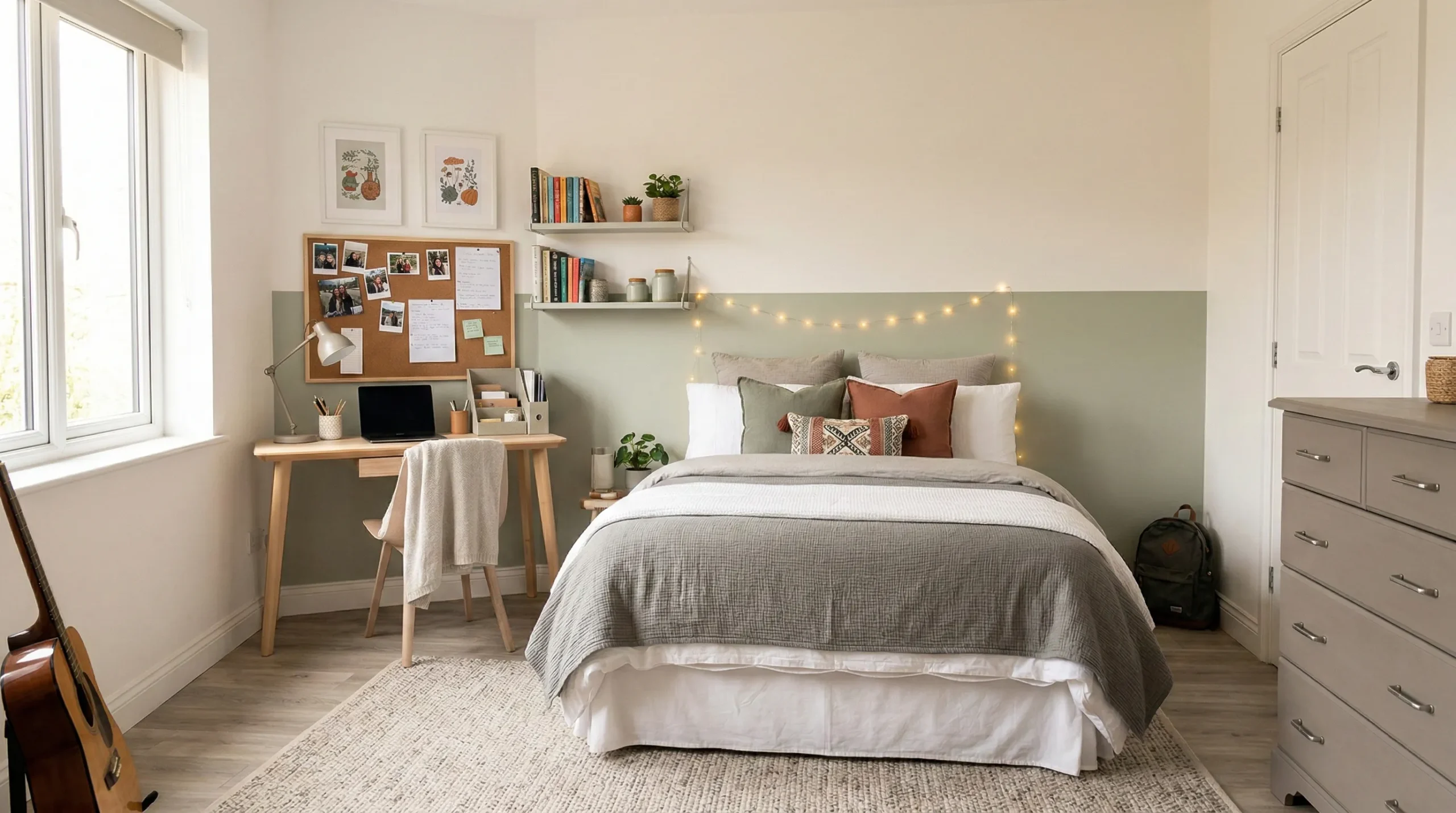
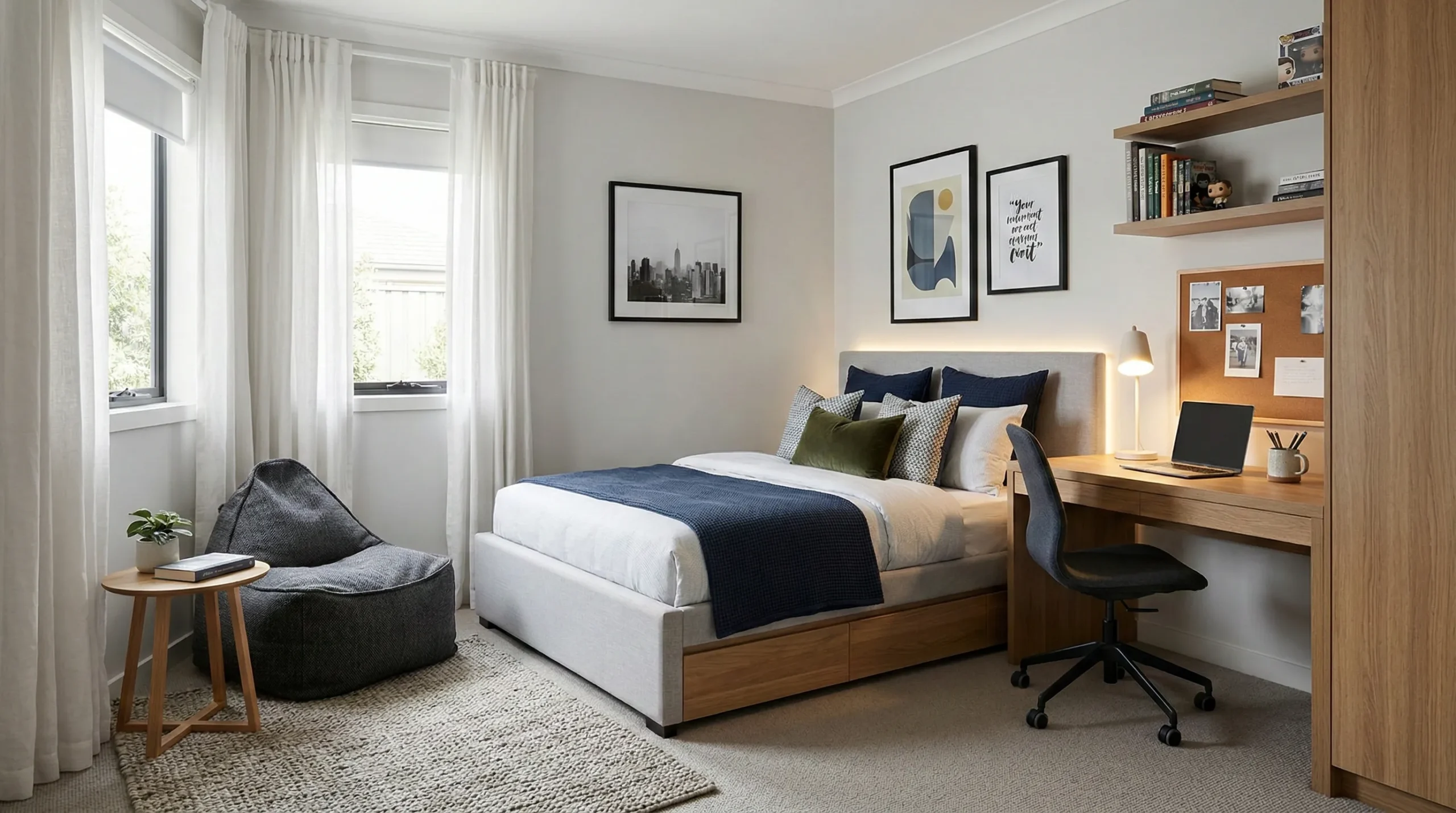
A child’s bedroom is more than a place to sleep. It is a personal environment where imagination develops, habits are formed and independence begins. When designed correctly, it supports routine, creativity and emotional security. When handled poorly, it becomes cluttered, impractical and quickly outgrown. The purpose of this category is to equip parents and renovators with the knowledge required to design children’s bedrooms that are both beautiful and functional for the long term.
The starting point in any successful bedroom design is layout. Furniture placement should allow natural movement through the room. Beds should not block light or airflow. Wardrobes and storage must be positioned for easy access without dominating the space. A well-considered layout reduces daily friction and makes tidying simpler.
Timeless foundations are critical. Instead of designing around a short-lived theme, it is wiser to select neutral wall tones, durable flooring and quality core furniture. Personality can then be introduced through bedding, cushions, artwork and decorative items that can be updated as tastes change. This approach protects your investment while allowing the room to evolve naturally.
Storage is often underestimated in children’s rooms. As children grow, possessions multiply. Without structured storage systems, clutter quickly takes over. Built-in wardrobes, deep drawers, shelving units and under-bed storage should be planned early. When storage is integrated properly, children learn order and responsibility.
Furniture quality also matters greatly in this category. Beds should be stable and correctly constructed. Drawer runners must operate smoothly. Finishes should be durable and easy to clean. Understanding how to assess construction quality prevents costly replacement and ensures safety.
Lighting plays a key role. A combination of ambient lighting, bedside lighting and task lighting creates flexibility. Natural light should be maximised where possible, as it contributes to wellbeing and healthy sleep cycles.
Another important consideration is adaptability. A bedroom designed for a five-year-old should not require complete replacement at ten. By choosing adjustable desks, timeless bed designs and flexible storage solutions, the room can transition smoothly through different stages of childhood.
Within this category, you will find structured guidance on planning room proportions, selecting quality furniture, integrating storage and maintaining cohesive styling. The aim is not to promote trends, but to build knowledge. When you understand the fundamentals of children’s bedroom design, you are far better prepared to make confident, sensible decisions that stand the test of time.